
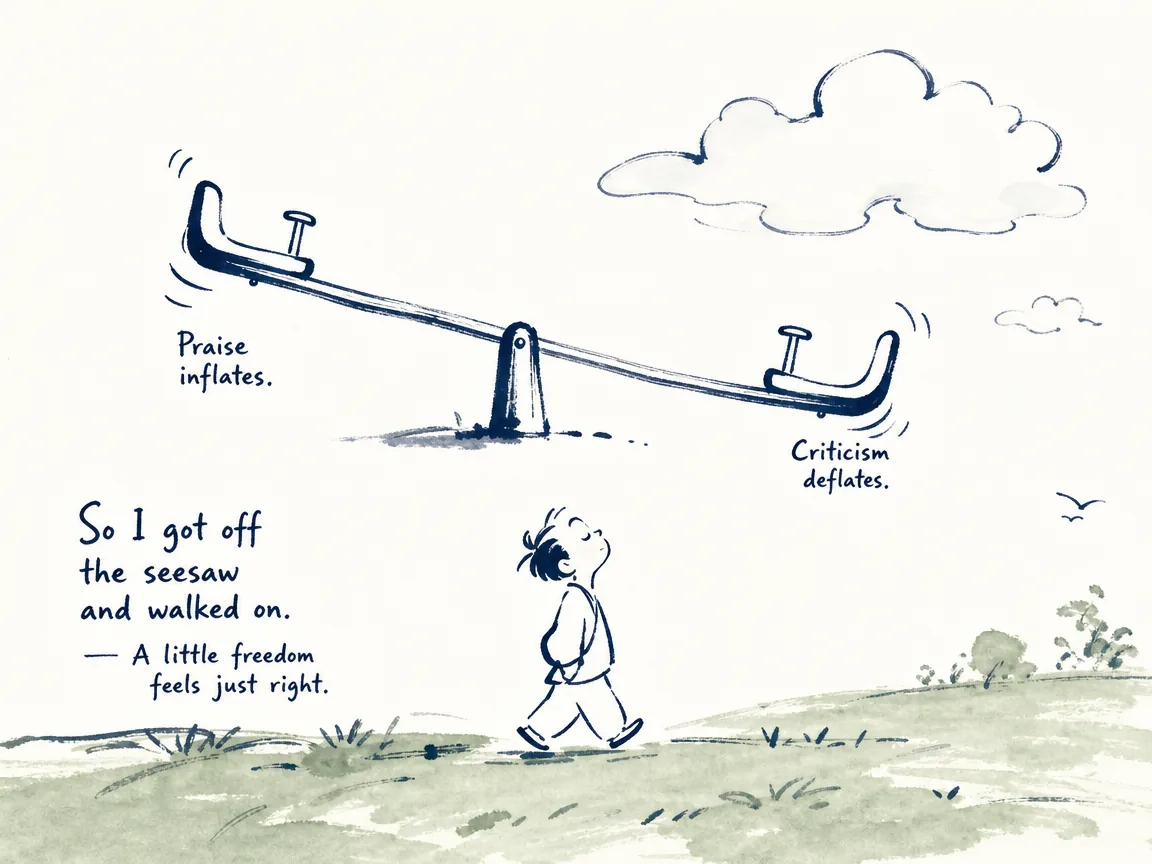
You receive a compliment at work, and somehow it lingers all day. A paragraph in your mind replays it, reshapes it, builds a whole story out of two sentences. Then a friend doesn't reply to your message quickly, and suddenly you are wondering what you did wrong. The algorithm shows fewer engagement numbers than last week, and you feel like a failure. These moments are small on paper. In practice, they run your nervous system through a dozen emotional loops before breakfast.
Modern life has given us more opportunities to be seen, praised, measured, and rated than any generation before us. That sounds like progress. But it also means that our sense of self has been quietly outsourced to an endless stream of external signals. We tell ourselves we are sensitive, anxious, or insecure. Laozi, attributed to the ancient Chinese philosopher commonly known as Laozi [2], saw something deeper two millennia ago. He suggested that the problem is not that the world is too harsh, but that we have anchored our identity to everything that can be given and taken away—a foundational perspective explored in Daodejing Chapter 13.
His diagnosis appears in Chapter 13 of the Daode jing, a text that modern scholarship understands as a compiled collection drawing on earlier oral traditions rather than a single author speaking in one moment [2]. The chapter moves from an observation about praise and blame to a radical claim about the self itself. It does not offer a coping technique. It asks a sharper question: what happens to your peace when your sense of who you are depends on what happens to you?
Daodejing Chapter 13: The Secret Life of Your Reactions
Consider the rhythm of a typical week. A leader says you did good work, and for three days you feel like you can do anything. A colleague does not mention your idea in a meeting, and you spend an evening analyzing whether they are upset with you. Your social media post hits a milestone, and you feel validated. It drops below expectations, and you question whether you belong in the conversation at all.
Most people describe these patterns as emotional sensitivity. Some call them anxiety, perfectionism, or people-pleasing. Laozi frames them differently. The recurring trigger is not the external event itself, but the structure behind it: a self that treats outside validation as proof of worth and outside disapproval as proof of failure. When the center of gravity sits in reputation, status, relationships, or metrics, every shift in those areas feels like a shift in reality.
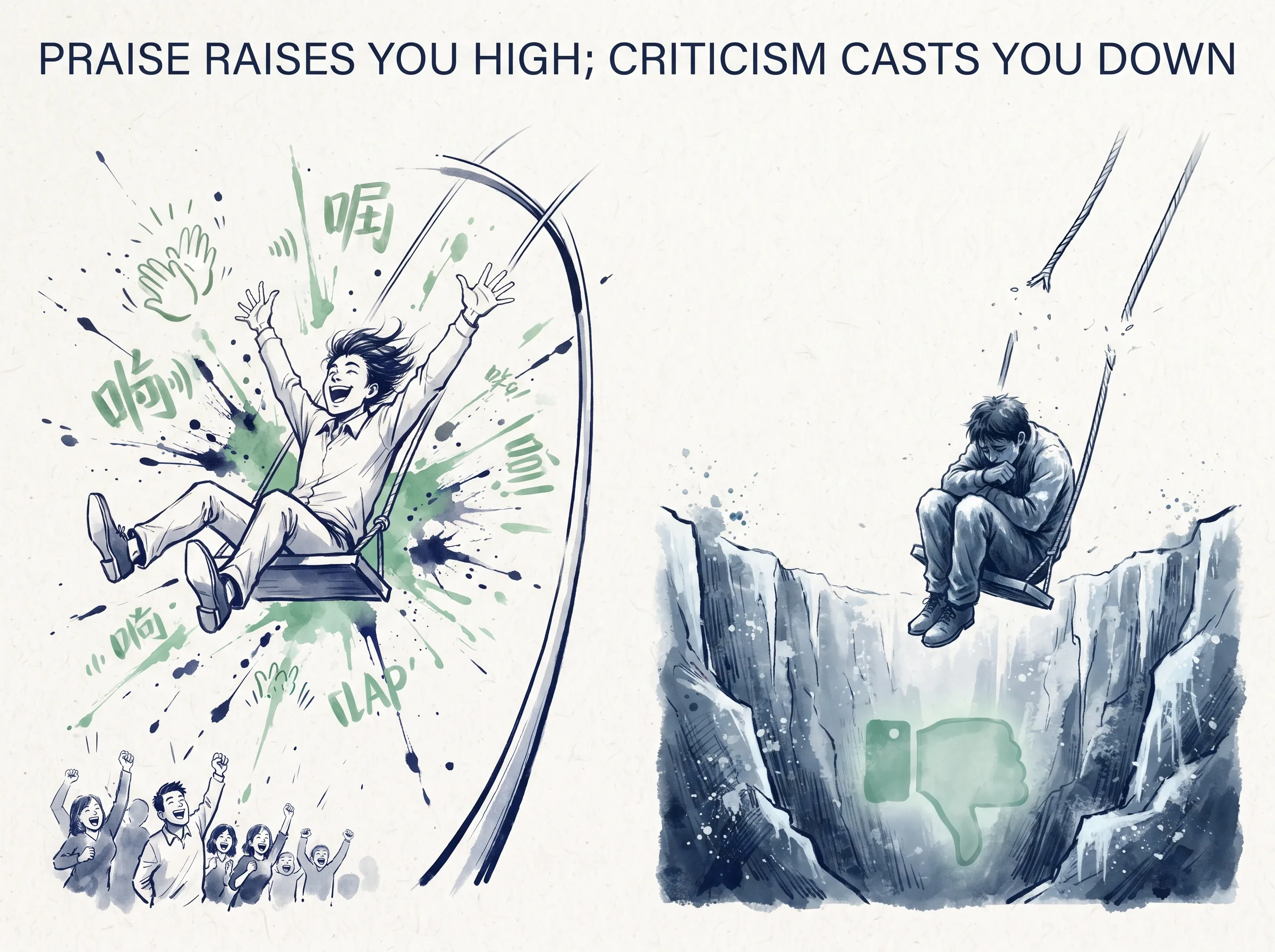
This is not a moral failure. It is a structural one. The modern world is full of visible evaluation systems. Schools score students. Companies measure performance. Platforms count likes and followers. Society ranks income, appearances, and credentials. When those systems become the mirrors through which people see themselves, even success becomes precarious, because nothing permanent is guaranteed.
Why Even Praise Can Unsettle You
The opening lines of Daodejing Chapter 13 in certain received versions read: "Favor and disgrace seem frightening. Importance is a calamity rooted in the self" [4]. The phrase usually translated as "startled by favor and disgrace" points to a paradox that feels counterintuitive at first. People assume only criticism wounds. Laozi suggests that praise unsettles you just as much, because it lifts you up and places you in danger of falling.
A traditional Tang dynasty commentary explains this clearly. The commentator notes that ordinary people tend to feel disturbance when disgraced but not always when favored. Laozi's warning is that receiving favor should be regarded with the same caution and vigilance as receiving disgrace, because both tie your stability to something outside yourself [4].
Think about what happens after a compliment. At first, there is pleasure. But pleasure of this kind carries a hidden tax: the fear of losing it. If your worth depends on being praised, you must also carry the worry that praise will stop. If your identity rests on a title, you must defend it. If your value is tied to visibility, you become afraid of being overlooked. The high and the low end up sharing the same mechanism. Both make your inner state dependent on external conditions.
This pattern is not limited to ancient philosophy. Modern research on social media shows that receiving fewer likes than peers can increase feelings of rejection and trigger negative emotions, especially among adolescents already vulnerable to peer victimization [3]. The platform delivers a clear signal: your social standing is quantified. That quantification makes praise feel like proof and silence feel like loss. The same structure applies to any system where worth is measured rather than assumed.
Continue with the deeper interpretation and practical application.
ChiDestiny members get access to the full analysis, modern applications, and the growing Chinese Wisdom Library.
A Few Questions Readers Often Ask
Does Laozi want people to stop caring about praise and criticism?
No. Caring is natural. The issue is dependency. If your sense of worth rises and falls with every external comment, you have handed your inner compass to someone else. Laozi's point is not that you should ignore feedback, but that you should not treat praise as proof of value or criticism as proof of failure. You can listen without collapsing.
Is "no self" the same as having no identity or no boundaries?
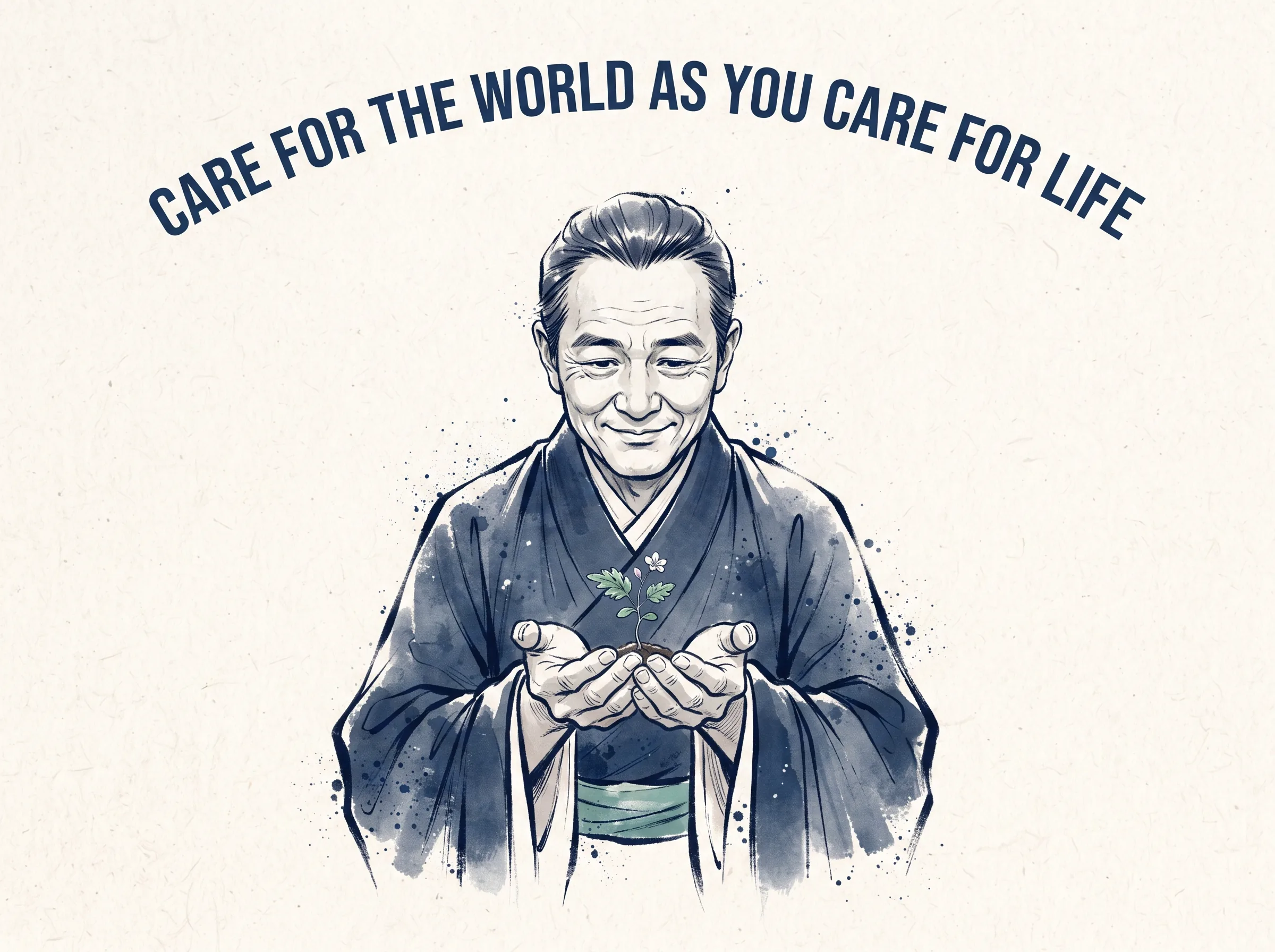
Not at all. The concept does not erase personhood. It describes a shift in where identity is anchored. Boundaries remain important. Responsibility remains important. The difference is that identity is no longer fused with reputation, status, or outcomes. You can still say who you are, but you are less terrified when the world disagrees.
If external things do not define me, why strive at all?
Striving is not the problem. Striving for what matters is fine. The problem is striving to prove worth rather than to create value. When the goal is contribution, skill, growth, or care, the outcome still matters. But the outcome does not become the final verdict on your humanity. This makes effort more sustainable and less exhausting.
Can this help with modern anxiety or social media stress?
These ideas offer a perspective, not a clinical treatment. Research shows that social media feedback can affect emotions, especially among vulnerable groups [3]. Ancient wisdom can help reframe how people relate to those signals, but it does not replace professional support when anxiety is severe or persistent.
Closing Reflection
The heaviest burden in modern life is often not chaos outside, but a self held too tightly inside. When identity is built on praise, success, approval, or visibility, every shift in those conditions feels like a threat. Laozi's insight in Chapter 13 is not an escape from the world. It is an invitation to stop building your home in what comes and goes.
You do not need to reject recognition, achievement, or connection. You only need to stop treating them as the proof of your worth. When that link loosens, praise loses its power to inflate you, and criticism loses its power to break you. The world still moves. People still judge. Platforms still change. But your inner ground stays steady.
One practical step to try today: notice one area where your peace is currently held hostage by something outside yourself. It might be a job title, a relationship, a number on a screen, or a reputation you have worked hard to build. Write it down. Ask yourself what would happen if you cared deeply about the work or the person, but let the outcome stop being the final word on who you are. You may not solve everything today. But you may start to reclaim the room inside yourself.
To explore these themes from another angle, read our related reflection on Why Your Good Habits Keep Failing (A Taoist Explanation).
For a deeper comparative examination of these ideas, explore our related study on Why Does a Leader Without Fixed Opinions See People More Clearly?.
Sources & Further Reading
[1] Stanford Encyclopedia of Philosophy entry on Religious Daoism — provides scholarly context on the composition and traditional attribution of the Daode jing.
[2] Chinese Text Project edition of the Daode jing, Chapter 13 — contains the standard received text of Chapter 13.
[3] Tang Xuanzong's Imperial Commentary on the Daode jing — includes Chapter 13 with traditional commentary relevant to the interpretation of favor, disgrace, and self.
[4] Study on social media liking and adolescent emotional responses (PMC) — reports experimental findings on how receiving fewer likes can increase feelings of rejection and negative affect among adolescents.
Further Reading
- Dao De Jing (Daode jing), Chapter 13, in multiple English translations for comparative study.
- Works on classical Chinese philosophy and self-cultivation for readers interested in practical applications of Daoist thought.






