
馬蹄第九
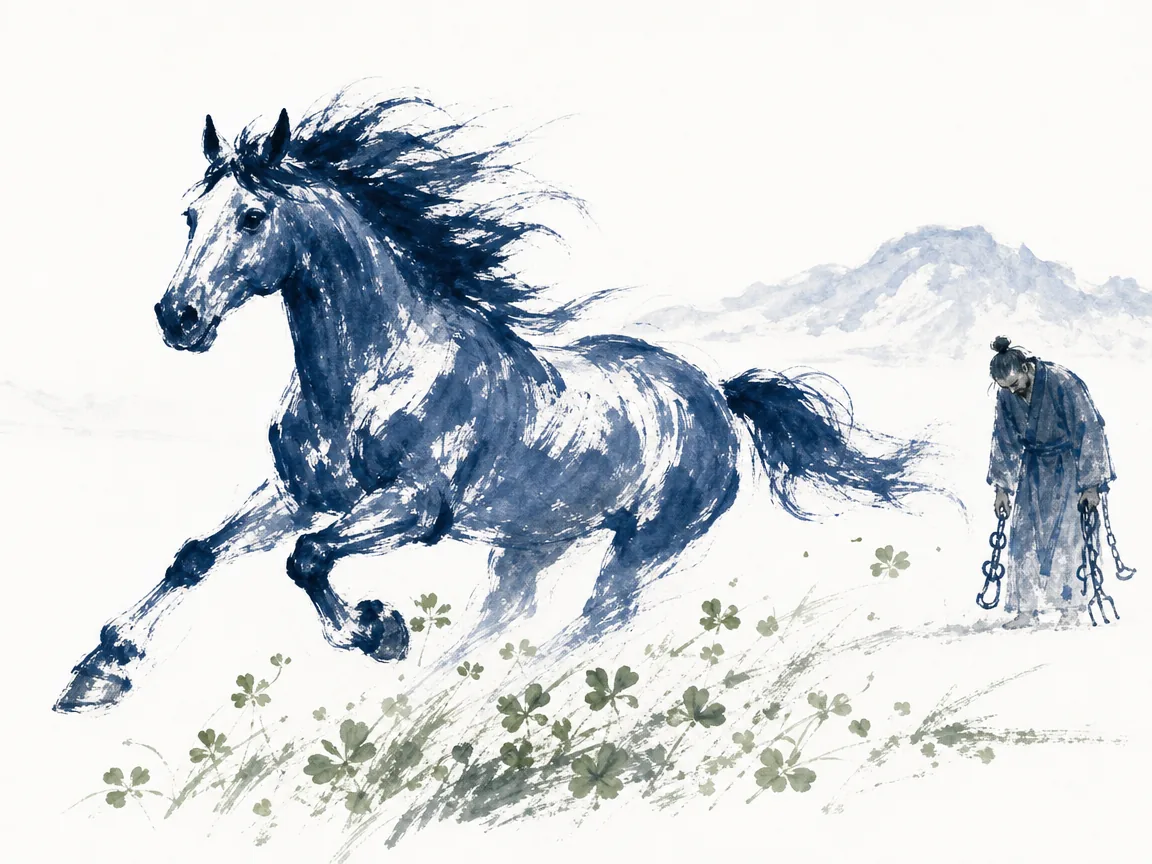
Core Insight: "Horses live on dry land, eat grass, and drink water. When pleased, they rub necks; when angry, they turn backs and kick. This is the natural nature of horses. But when halters and bits are put upon them… their native nature is broken." — Zhuangzi, 馬蹄第九
Horses in their wild state eat grass, drink spring water, and gallop with joy. But when the famous horse-trainer Bo Le arrives with branding irons, bits, whips, and reins, half the horses die in the breaking. When human rulers introduce rigid rituals and calculated moral codes, the pristine innocence of humanity is shattered—a foundational perspective explored in Zhuangzi Chapter 9 Translation.
Zhuangzi Chapter 9 Translation: How Social Taming Destroys Innate Innocence
Zhuangzi Chapter 9 Translation (馬蹄第九) invites us to step back from our everyday conditioned assumptions. For modern readers living in an achievement-driven world, Zhuangzi does not offer more techniques for self-improvement; instead, he asks what would happen if we stopped measuring our worth entirely by external usefulness and societal approval. To see how this ancient insight translates to everyday life, read our practical modern reflection on Why You Feel Empty Despite Success: Zhuangzi on Taming vs. Growth.
Complete Chapter Translation: Modern Western Reading
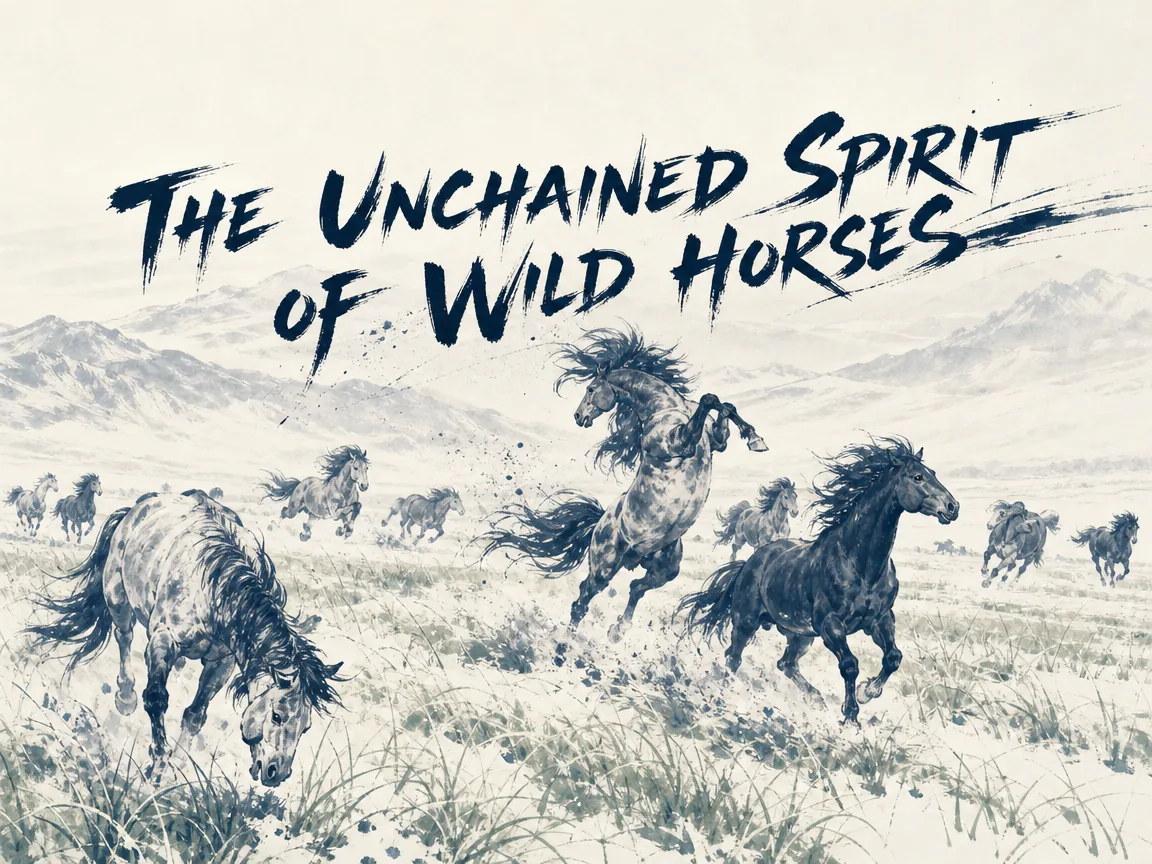
Horses can with their hoofs tread on the hoarfrost and snow, and with their hair withstand the wind and cold; they feed on the grass and drink water; they prance with their legs and leap: this is the true nature of horses. Though there were made for them grand towers and large dormitories, they would prefer not to use them. But when Bo-le (arose and) said, 'I know well how to manage horses,' (men proceeded) to singe and mark them, to clip their hair, to pare their hoofs, to halter their heads, to bridle them and hobble them, and to confine them in stables and corrals. (When subjected to this treatment), two or three in every ten of them died. (Men proceeded further) to subject them to hunger and thirst, to gallop them and race them, and to make them go together in regular order. In front were the evils of the bit and ornamented breastbands, and behind were the terrors of the whip and switch. (When so treated), more than half of them died. The (first) potter said, 'I know well how to deal with clay;' and (men proceeded) to mould it into circles as exact as if made by the compass, and into squares as exact as if formed by the measuring square. The (first) carpenter said, 'I know well how to deal with wood;' and (men proceeded) to make it bent as if by the application of the hook, and straight as if by the application of the plumb-line. But is it the nature of clay and wood to require the application of the compass and square, of the hook and line? And yet age after age men have praised Bo-le, saying, 'He knew well how to manage horses,' and also the (first) potter and carpenter, saying, 'They knew well how to deal with clay and wood.' This is just the error committed by the governors of the world.
According to my idea, those who knew well to govern mankind would not act so. The people had their regular and constant nature: they wove and made themselves clothes; they tilled the ground and got food. This was their common faculty. They were all one in this, and did not form themselves into separate classes; so were they constituted and left to their natural tendencies.
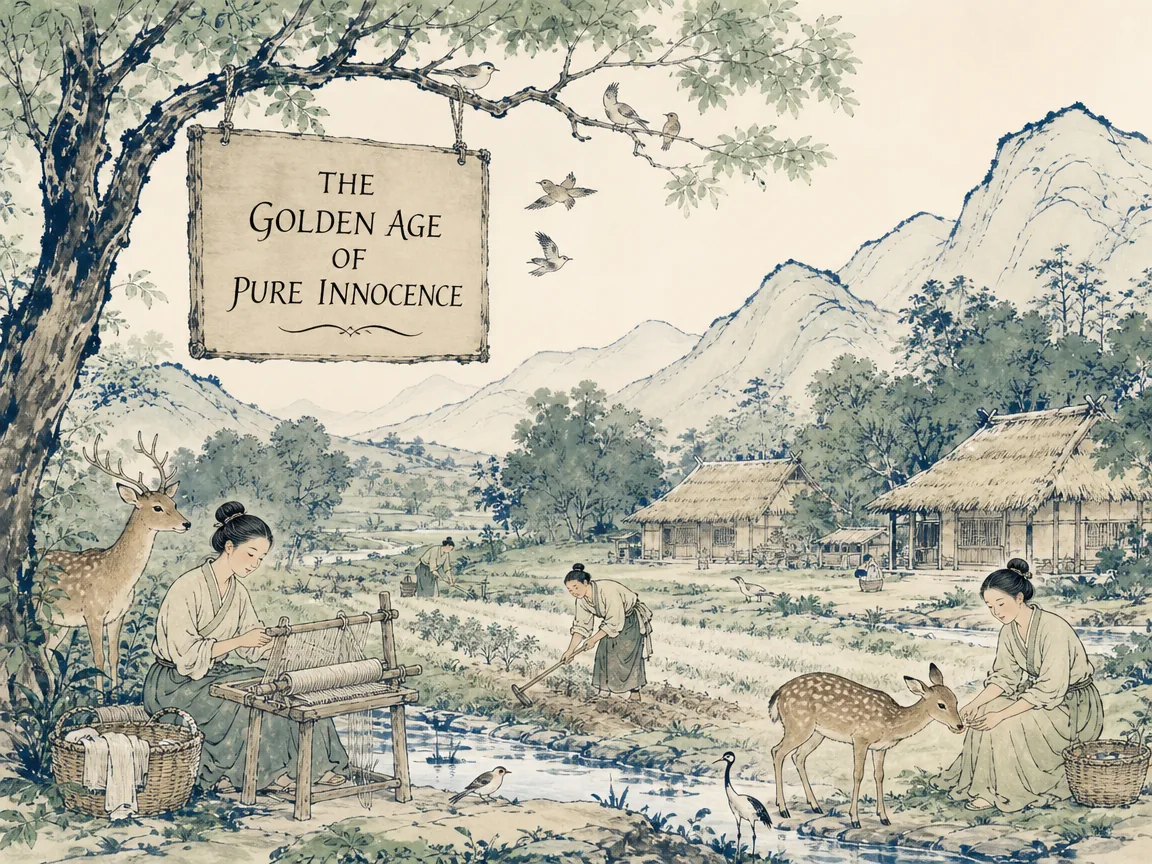
Therefore in the age of perfect virtue men walked along with slow and grave step, and with their looks steadily directed forwards. At that time, on the hills there were no foot-paths, nor excavated passages; on the lakes there were no boats nor dams; all creatures lived in companies; and the places of their settlement were made close to one another. Birds and beasts multiplied to flocks and herds; the grass and trees grew luxuriant and long. In this condition the birds and beasts might be led about without feeling the constraint; the nest of the magpie might be climbed to, and peeped into. Yes, in the age of perfect virtue, men lived in common with birds and beasts, and were on terms of equality with all creatures, as forming one family – how could they know among themselves the distinctions of superior men and small men? Equally without knowledge, they did not leave (the path of) their natural virtue; equally free from desires, they were in the state of pure simplicity. In that state of pure simplicity, the nature of the people was what it ought to be. But when the sagely men appeared, limping and wheeling about in (the exercise of) benevolence, pressing along and standing on tiptoe in the doing of righteousness, then men universally began to be perplexed. (Those sages also) went to excess in their performances of music, and in their gesticulations in the practice of ceremonies, and then men began to be separated from one another. If the raw materials had not been cut and hacked, who could have made a sacrificial vase from them? If the natural jade had not been broken and injured, who could have made the handles for the libation-cups from it? If the attributes of the Dao had not been disallowed, how should they have preferred benevolence and righteousness? If the instincts of the nature had not been departed from, how should ceremonies and music have come into use? If the five colours had not been confused, how should the ornamental figures have been formed? If the five notes had not been confused, how should they have supplemented them by the musical accords? The cutting and hacking of the raw materials to form vessels was the crime of the skilful workman; the injury done to the characteristics of the Dao in order to the practice of benevolence and righteousness was the error of the sagely men.
Horses, when living in the open country, eat the grass, and drink water; when pleased, they intertwine their necks and rub one another; when enraged, they turn back to back and kick one another – this is all that they know to do. But if we put the yoke on their necks, with the moonlike frontlet displayed on all their foreheads, then they know to look slily askance, to curve their necks, to rush viciously, trying to get the bit out of their mouths, and to filch the reins (from their driver); this knowledge of the horse and its ability thus to act the part of a thief is the crime of Bo-le. In the time of (the Di) He-xu, the people occupied their dwellings without knowing what they were doing, and walked out without knowing where they were going. They filled their mouths with food and were glad; they slapped their stomachs to express their satisfaction. This was all the ability which they possessed. But when the sagely men appeared, with their bendings and stoppings in ceremonies and music to adjust the persons of all, and hanging up their benevolence and righteousness to excite the endeavours of all to reach them, in order to comfort their minds, then the people began to stump and limp about in their love of knowledge, and strove with one another in their pursuit of gain, so that there was no stopping them: this was the error of those sagely men.
Continue to the next chapter of the classical text in Zhuangzi’s next profound exploration in Cutting Open Satchels: Why Clever Protections Only Arm the Great Thief.
For a deeper comparative examination of these ideas, explore our related study on Ingrained Ideas: Natural Nobility Without Strained Virtue.







[…] Continue to the next chapter of the classical text in Zhuangzi’s next profound exploration in Horses’ Hoofs: The Native Wildness and the Tyranny of Training. […]