
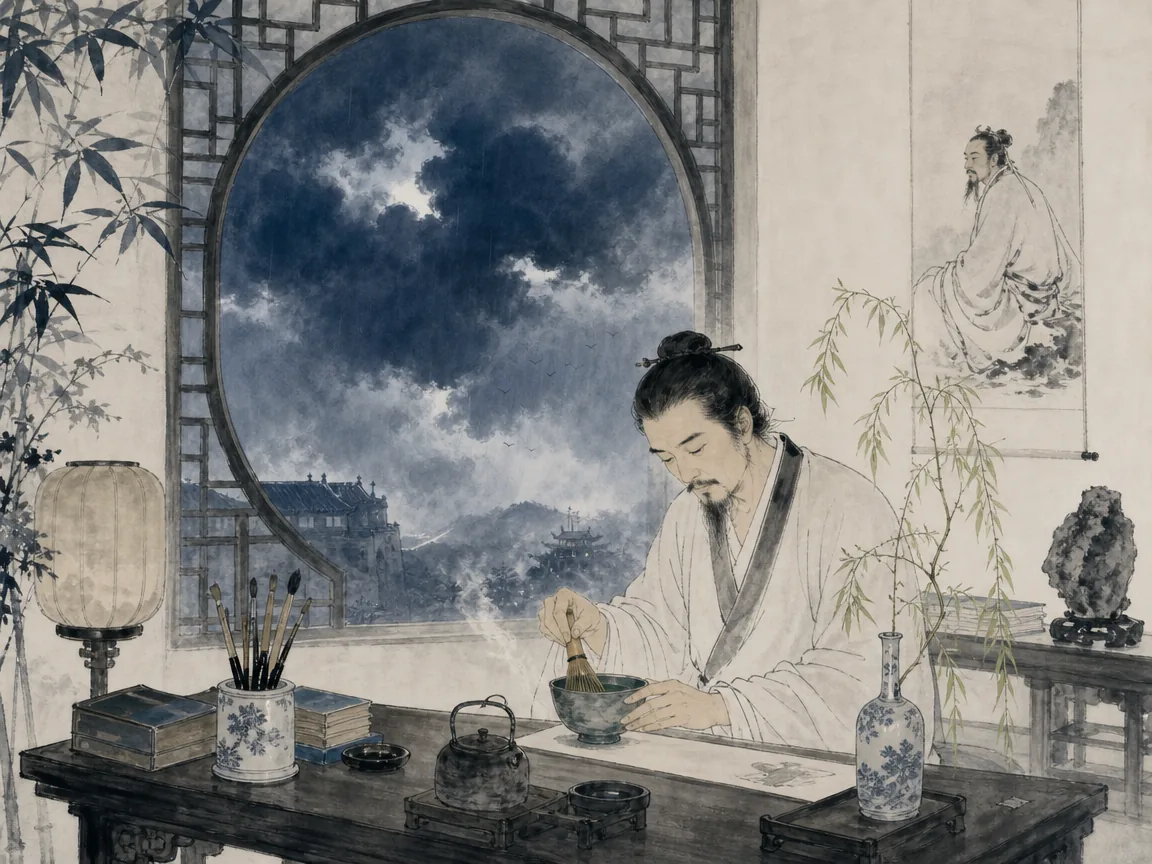
s# 20 | Song Dynasty Poets: Ancient Wisdom for Modern Uncertainty
You have spent years mapping out a life that seemed certain: the career track, the relationship milestones, the version of yourself you thought you would become by now. Then something happens. A layoff. A goodbye. A diagnosis. The plan falls apart, and you are left standing in the rubble of what you thought was supposed to be. It is easy to feel that you have been denied something you were owed — or worse, that you have lost time you cannot get back. We live in a culture that treats deviation from the plan as failure, as wasted years, as evidence that something has gone wrong—a foundational perspective explored in Song Dynasty Poets on Uncertainty.
Nearly a thousand years ago, a different kind of writer faced this same ache. The Song Dynasty produced some of the most enduring poetry in Chinese literary history, and many of its greatest ci poets did not write from positions of comfort or stability. They wrote from exile, from political defeat, from the collapse of dynasties and the loss of loved ones. Their genre — ci, or lyric poetry — was not designed to offer solutions. It was designed to hold space for what could not be solved. What these poets offer modern readers is not a system of self-improvement but a way of being honest about suffering without being consumed by it.
This article explores how four Song-era poets — Su Shi, Xin Qiji, Li Yu, and Li Qingzhao — transformed profound disruption into art that has survived nine centuries. Their responses were not uniform, and neither are the lessons they offer. Some found freedom through acceptance. Others channeled frustration into creation. Some sat with grief without rushing to resolve it. Together, their work suggests that finding meaning when life diverges from the plan does not require a dramatic turnaround — it requires the willingness to write honestly about what has happened.
Song Dynasty Poets on Uncertainty: Su Shi and the Practice of Acceptance
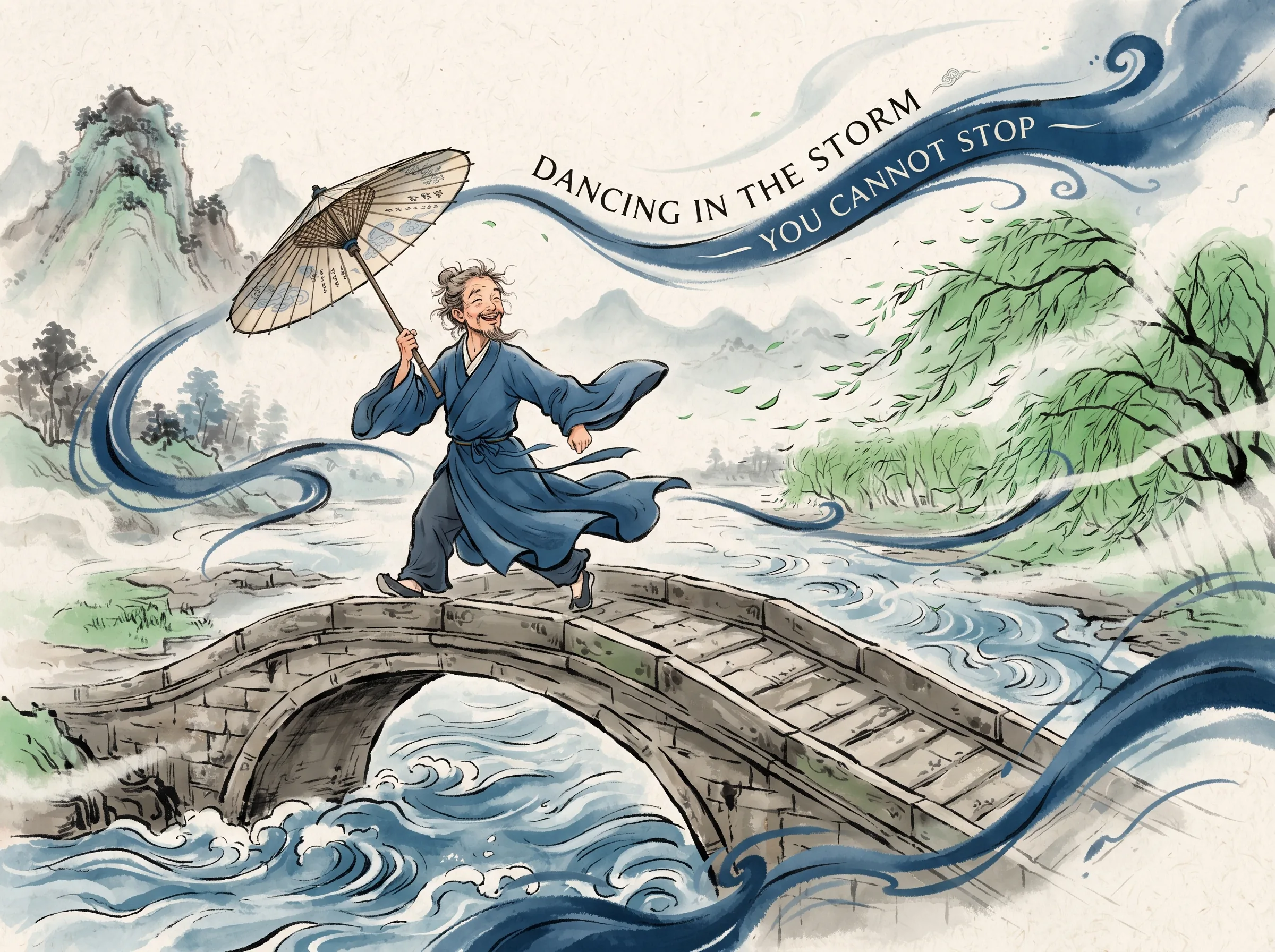
In the spring of 1082, the poet Su Shi was traveling along the road to Shahu when a sudden rainstorm caught him and his companions off guard. The group had left their rain gear behind. His companions struggled through the downpour, but Su Shi continued walking without haste. When the rain cleared and the sun emerged, he wrote a ci poem that would become one of the most widely read in the Chinese literary tradition [1].
The poem, titled Ding Feng Bo (Calming the Waves; Chinese: 《定风波》), contains a line that has resonated with readers across centuries: "Bamboo staff and straw sandals prove lighter than a horse—who needs to fear? / In a straw cloak through the misty rain, I'll face my whole life" [1]. The image is striking precisely because it is not a declaration of courage in the conventional sense. Su Shi is not saying he has conquered fear or that the storm was beneficial. He is saying that, given the conditions as they are, he will continue walking. The storm is not an interruption of his journey; it is part of the journey.
In contemporary psychology, this kind of response is sometimes discussed under the concept of psychological flexibility—the ability to adapt one's thoughts and behaviors when circumstances change, rather than rigidly insisting that reality conform to a plan. A related Chinese expression is shun qi ziran (“letting things follow their natural course”; Chinese: 顺其自然) [1]. It does not imply passivity or resignation. It implies a clear-eyed recognition of what is actually happening, and a decision to move forward within those conditions rather than against them.
For modern readers navigating career disruptions, relationship changes, or health challenges, Su Shi's approach offers a quiet question: Where am I spending energy resisting what cannot be changed? This is not advice to stop striving or to abandon your goals. It is an invitation to examine whether the resistance itself is adding weight to an already difficult situation. Su Shi's poem does not resolve the fact that he was caught in the rain without protection. It simply refuses to treat the rain as an argument against continuing.
The Weight of Unspoken Ambition: Xin Qiji
Xin Qiji is remembered in the Chinese literary tradition as one of the great ci poets of the Southern Song period [2]. His frequently cited poem Chou Nu Er (The Ugly Maid; Chinese: 《丑奴儿》), written on the wall of a mountain inn along the Boshan road, contains a line that captures the difficulty of expressing ambition that has nowhere to go: "Now that I have known the full taste of sorrow / I want to speak, yet stop— / I want to speak, yet stop— / Instead I say: What a fine autumn day" [2].
The poem describes a progression: as a young man, Xin Qiji claims he "did not know the taste of sorrow" and liked to compose verses about it; in his later years, he has "known the full taste of sorrow," and the result is silence — or, more precisely, a deflection into remarks about the weather. This is not the silence of someone who has found peace. It is the silence of someone whose feelings are too complex, too painful, or too politically charged to be spoken openly.
The emotional situation Xin Qiji describes is widely recognizable today. A professional may possess skills and ambitions that their current circumstances do not allow them to exercise. A creative person may feel their work is undervalued or redirected toward tasks that feel insignificant. The frustration is real, and so is the impulse to either suppress it or express it in ways that invite further harm.
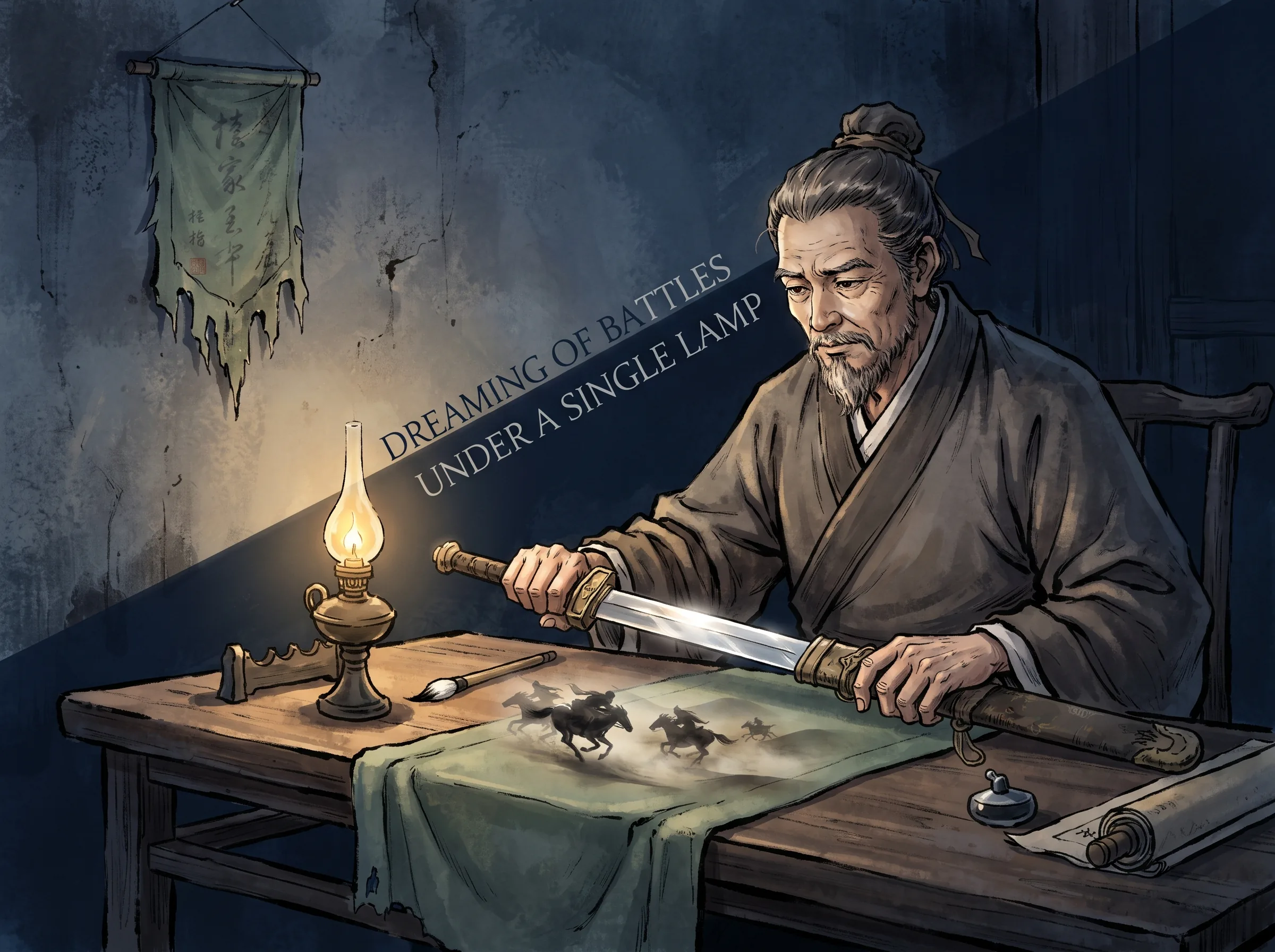
In Chinese literary discourse, this experience is sometimes described as huai cai bu yu (“possessing talent without finding the opportunity to use it”; Chinese: 怀才不遇). The concept appears across Chinese literary history and is not unique to the Song period, though Xin Qiji's ci remains one of its most vivid expressions [2]. What his poem offers is not a solution to the structural conditions that limit ambition, but a recognition that the feeling itself has a long and shared history. The impulse to name what cannot be named—and to settle, momentarily, for naming the weather instead—is itself a form of honesty. Examine this artistic principle further through the classical aesthetic philosophy of Why the Weakest Dynasty Painted the Strongest Landscape.
For readers experiencing professional stagnation or a mismatch between their abilities and their opportunities, Xin Qiji's poem raises a practical question: What would it look like to name the feeling directly, even briefly, without needing it to produce an immediate solution? Writing a sentence you might not share with anyone. Sharing it with one trusted person. Noticing the gap between what you feel and what you are willing to say out loud. The poem does not promise relief, but it does suggest that the silence itself can be observed — and that observation is a kind of clarity.
Facing What Cannot Be Reversed: Li Yu and Li Qingzhao
Li Yu and Li Qingzhao lived in different centuries and under very different circumstances, yet both are among the most frequently read ci poets in the Chinese tradition for the way they confront loss without turning away from it.
Li Yu's Yu Mei Ren (Lady Yu; Chinese: 《虞美人》), associated with the period after the fall of the Southern Tang, contains one of the most enduring images of sorrow in Chinese literature: "How much sorrow can there be? / Like a river of spring water flowing east" [3]. The poem reflects on the passage of time, the persistence of memory, and the impossibility of reversing what has already happened. The spring river that flows east is an image of irreversible movement—water does not return to its source, and neither does time return to a moment before loss.
Li Qingzhao's Wu Ling Chun (Spring in Wuling; Chinese: 《武陵春》), written in her later years, captures a similarly honest moment: "Things remain, people have changed—all is over. / I want to speak, but tears come first" [4]. Both poems resist the temptation to transform grief into motivation or to frame suffering as a necessary step toward growth. They allow the pain to appear as it is, without immediate resolution.
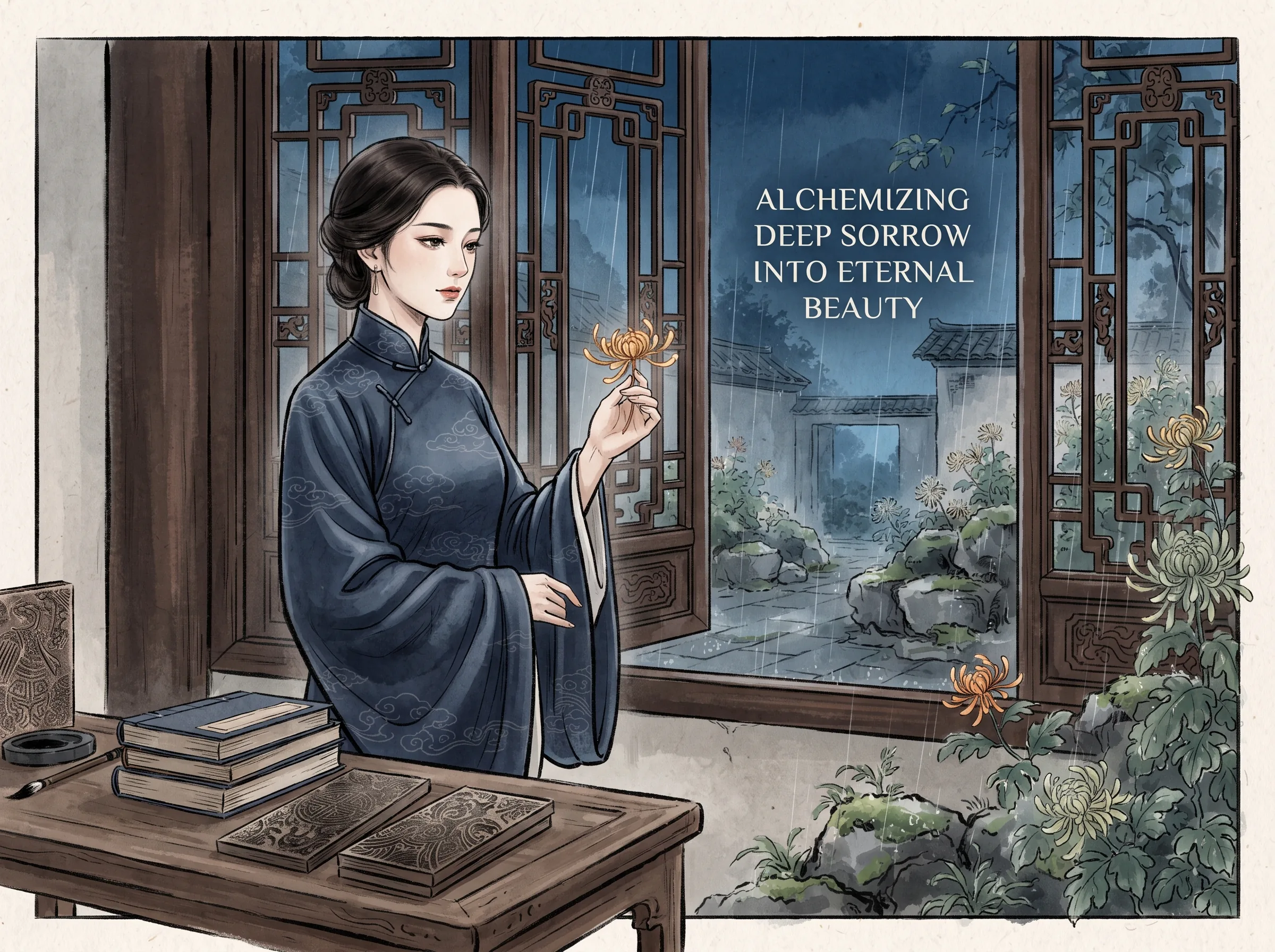
There is a distinction worth noting between these two approaches. Li Yu's poetry emerged from the catastrophic loss of a kingdom and a life he could not reclaim. Li Qingzhao's emerged from the dissolution of a shared world—the displacement and personal losses that marked her later years. Their specific circumstances were vastly different, yet both wrote through difficulty rather than past it. In some interpretations, their work is seen as aligning with a classical ideal of expressing sorrow with restraint rather than excess, sometimes summarized as ai er bu shang (“grief without self-destruction”; Chinese: 哀而不伤) [4]. Whether this framework fully applies to their individual cases is a matter of interpretation, but their poems do share a quality: they do not pretend the loss is anything other than what it is.
For readers navigating grief — whether over a relationship, a job, a health diagnosis, or a larger life transition — these poets offer a model of emotional honesty that does not require optimism to be valid. Sitting with the reality of what has been lost, without immediately converting it into a lesson or a comeback story, is itself a form of meaning-making.
Poetic Alchemy: Writing Through Difficulty
The ci poets of the Song Dynasty did not set out to create self-help guidance. They wrote because writing was the practice available to them for processing experience. In a cultural context where personal reflection and literary composition were closely linked, the act of composing poetry was itself a method of engaging with difficulty.
This does not mean that every poem they wrote resolved their suffering. Su Shi's rainstorm did not end. Xin Qiji's ambitions were not fulfilled. Li Yu did not regain his former world. Li Qingzhao's losses were not undone. What their work shows is that the act of honest expression can coexist with ongoing difficulty. The poem is not a replacement for the reality it describes; it is a space where that reality can be held without being simplified.
Modern practices that share this orientation — journaling, creative writing, certain forms of therapy — operate on a similar principle: the value lies not in producing a positive outcome but in allowing experience to be named and examined. None of these practices guarantee that life will improve as a result. But they do offer a way of staying present with what is happening, rather than retreating into denial or forcing a premature resolution.
Three Questions for Your Own Uncertain Season
The poets discussed here did not leave behind manuals, but their work suggests a few questions that may be useful when facing a life that has diverged from expectations:
-
Where am I resisting what I cannot change? Inspired by Su Shi's response to an unavoidable rainstorm, this question invites an examination of where energy is being spent on fighting reality rather than moving through it. Resistance is not always visible — it can appear as chronic frustration, repeated mental replaying of events, or a sense that life "should" have gone differently.
-
What can I create from what life has given me? Drawing on the practice evident in Xin Qiji's ci, this question addresses the gap between ambition and opportunity. It does not ask you to abandon your goals, but it does ask what can be made with the materials currently at hand — even if those materials feel inadequate compared to what was originally envisioned.
-
Am I processing my grief, or just rehearsing it? Inspired by the work of Li Yu and Li Qingzhao, this question distinguishes between the honest expression of loss and the repetitive cycling of pain without transformation. Processing involves naming the feeling and allowing it space; rehearsing involves returning to the same thought without new awareness. Both involve the same pain — but one moves through it, and the other may keep it in place.
These questions are not diagnostic tools. They are invitations to pause and look more closely at what is actually happening in a given moment. The poets' work suggests that clarity often arrives not from solving a problem but from seeing it more accurately.
Finding Meaning Without a Happy Ending
The ci poetry of the Song Dynasty has survived nine centuries not because its authors had happy endings, but because they were honest about endings of every kind. Su Shi walked through rain. Xin Qiji watched his ambitions stall. Li Yu lost everything he had known. Li Qingzhao sat with loneliness that had no immediate remedy. None of these poets wrote their way out of their circumstances, and none of their poems pretend that circumstances are anything other than what they are.
What their work does offer is a testimony to the possibility of continuing with clarity and restraint. The modern search for meaning when life does not go as planned often assumes that meaning must come from improvement, recovery, or a positive outcome. But the Song ci poets suggest something simpler and perhaps more sustainable: meaning can be found in the willingness to face reality honestly, to write about what happened without distortion, and to keep moving — slowly, imperfectly, without guarantees.
If you are currently navigating a situation where plans have fallen apart, the most practical step may be the oldest one: find a way to name what is happening, even imperfectly. A journal entry. A conversation with someone who will listen. A creative act that does not need to be good — only honest. The poets of the Song Dynasty did not need their suffering to produce a better future for their words to matter. Their words matter because they were true.
FAQ
What is ci poetry, and why was it significant in the Song Dynasty? Ci is a form of Chinese lyric poetry that flourished during the Song Dynasty (960–1279). Unlike the more formal regulated verse (shi) of earlier periods, ci allowed greater emotional flexibility and was often set to musical patterns. Its practitioners — including Su Shi, Xin Qiji, Li Yu, and Li Qingzhao — used it to explore personal experience, political frustration, and grief in ways that regulated verse did not typically accommodate.
Can Song Dynasty poetry be relevant to readers who are not familiar with Chinese culture? Yes. The situations these poets addressed — unexpected hardship, unfulfilled ambition, irreversible loss, and the search for meaning after plans fall apart — are not specific to any single culture or era. The value of reading their work lies not in memorizing historical details but in observing how they responded to disruption with honesty and restraint.
Should I read these poems in translation, or is the original Chinese necessary? Reading in translation is a valid and accessible way to engage with these poems. While some nuances of rhythm and wordplay are lost, the core emotional content — acceptance, frustration, grief, and honesty — remains legible. The translations used in this article are based on the original ci texts [1]–[4].
How is this different from typical self-help advice? Self-help writing often focuses on actionable steps toward improvement. The approach drawn from Song ci poetry is different: it begins with honest observation of reality as it is, rather than with a plan to change it. The goal is not to fix the situation but to understand it clearly enough to move through it with integrity, reflecting the enduring wisdom of Song Dynasty Poets on Uncertainty.
Examine this artistic principle further through the classical aesthetic philosophy of Beyond Effortlessness: What Chinese Classical Wisdom Says About Mastery, Burnout, and Letting Go.
For a deeper comparative examination of these ideas, explore our related study on When Exile Becomes Awakening: Su Shi’s Blueprint for Finding Purpose in Hard Times.
Sources & Further Reading
[1] Ding Feng Bo: “Do Not Listen to the Rain Beating Through the Forest” (《定风波·莫听穿林打叶声》) — Wikisource
[2] Chou Nu Er: “Written on a Wall Along the Boshan Road” (《丑奴儿·书博山道中壁》) — Wikisource
[3] Yu Mei Ren: “When Will the Spring Flowers and Autumn Moon End?” (《虞美人·春花秋月何时了》) — Wikisource
[4] Wu Ling Chun by Li Qingzhao (李清照《武陵春》) — Wikisource
Further Reading
- Victor H. Mair, The Columbia Anthology of Traditional Chinese Literature
- Helen Wang, Chinese Lyrics: An Anthology from the Eighth to the Fourteenth Century
- Complete Song Lyrics (《全宋词》) — a primary collection of Song ci texts






