
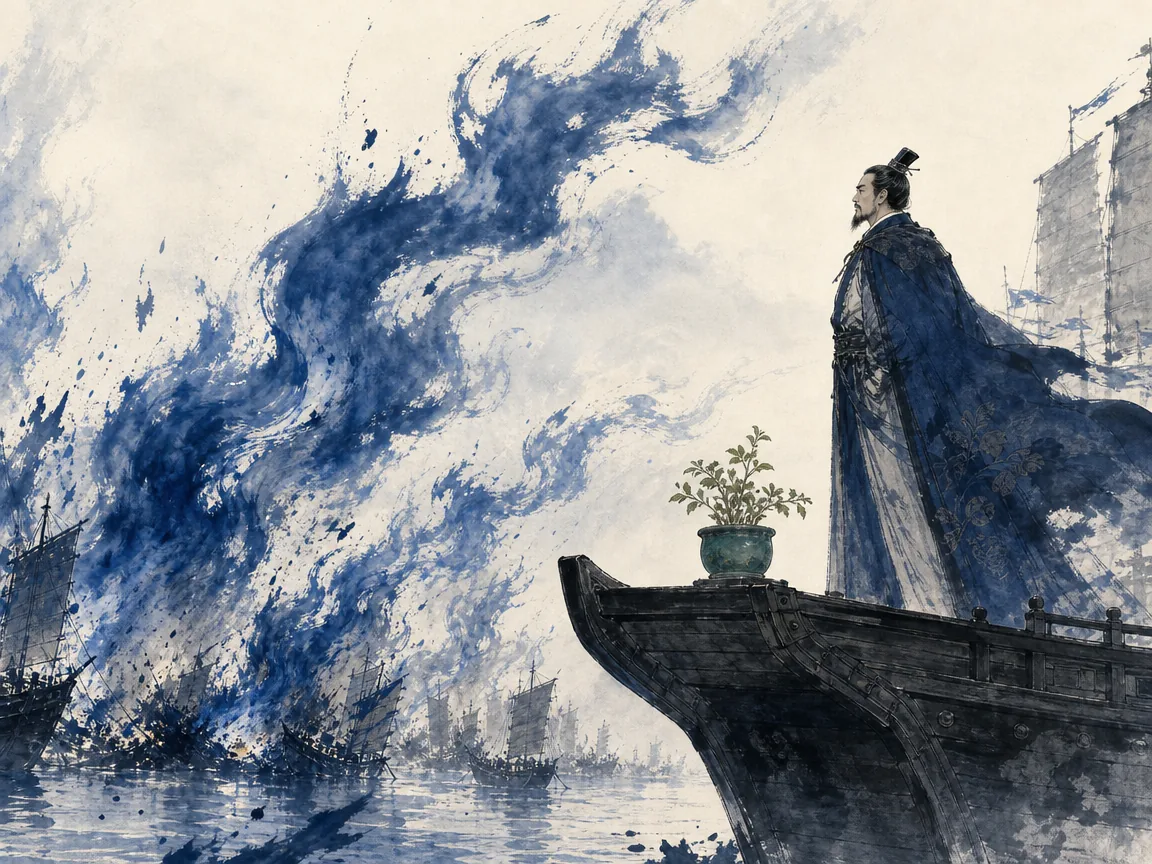
火攻第十二
Core Insight: "No ruler should put troops into the field merely to gratify his own spleen; no general should fight a battle simply out of pique. If it is to your advantage, make a forward move; if not, stay where you are." — Sun Tzu, 火攻第十二
「主不可以怒而興師,將不可以慍而致戰;合於利而動,不合於利而止。怒可以復喜,慍可以復說,亡國不可以復存,死者不可以復生。」
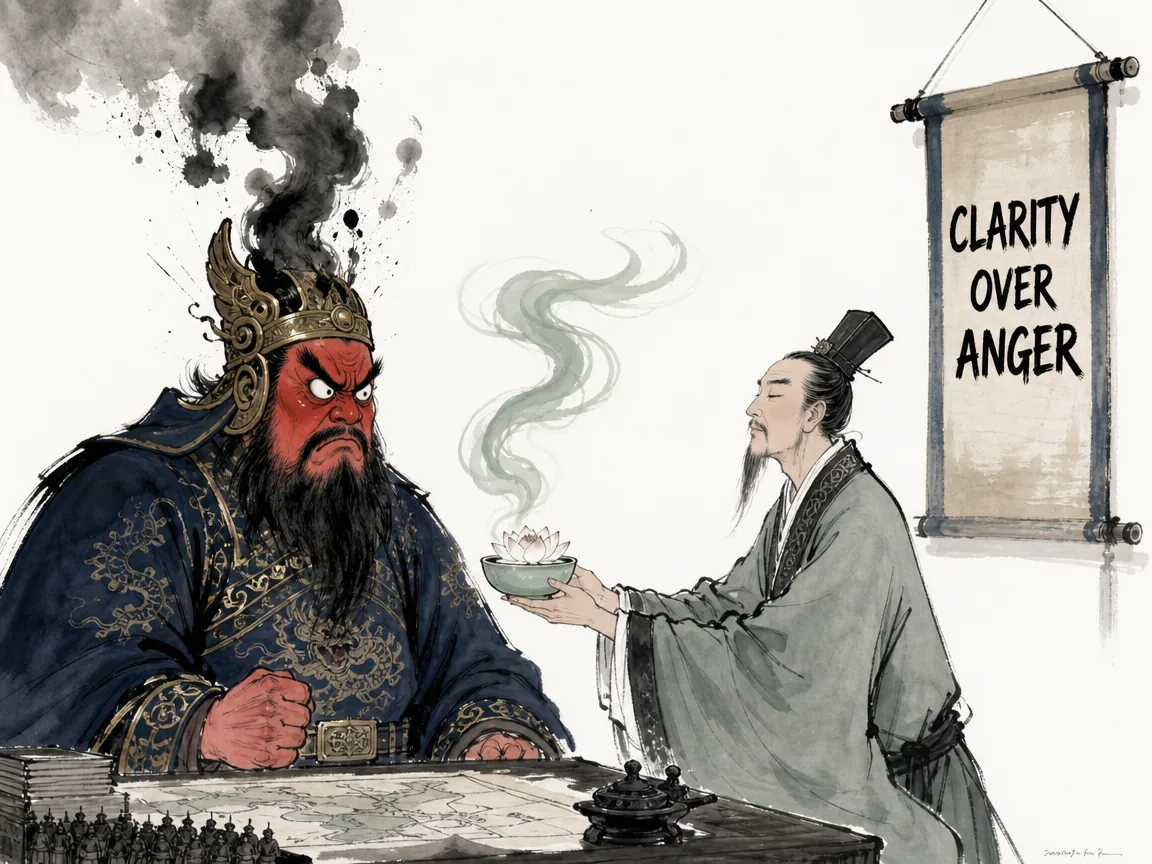
Fire multiplies tactical destruction when ignited with favorable winds, dry conditions, and precise timing. Yet destructive power demands supreme emotional temperance: an empire destroyed can never be rebuilt, and the dead cannot be brought back to life—a foundational perspective explored in Art of War Chapter 12. Discover how ancient strategy applies to modern competition in Why the Best Leaders Stop Searching for Heroes.
Art of War Chapter 12: Restraining Destructive Power
Art of War Chapter 12 (火攻第十二) details the methods and meteorological conditions required to deploy incendiary warfare effectively. Crucially, Sun Tzu couples technological destruction with strict moral and emotional restraint, warning sovereigns never to wage war out of personal anger or wounded pride.
Complete Chapter Translation: Modern Western Reading
Sun Tzŭ said: There are five ways of attacking with fire. The first is to burn soldiers in their camp; , found himself placed in extreme peril by the unexpected arrival of an envoy from the Hsiung-nu . In consultation with his officers, he exclaimed: "Never venture, never win! The only course open to us now is to make an assault by fire on the barbarians under cover of night, when they will not be able to discern our numbers. Profiting by their panic, we shall exterminate them completely; this will cool the King’s courage and cover us with glory, besides ensuring the success of our mission.’ The officers all replied that it would be necessary to discuss the matter first with the Intendant. Pan Ch’ao then fell into a passion: ‘It is today,’ he cried, ‘that our fortunes must be decided! The Intendant is only a humdrum civilian, who on hearing of our project will certainly be afraid, and everything will be brought to light. An inglorious death is no worthy fate for valiant warriors.’ All then agreed to do as he wished. Accordingly, as soon as night came on, he and his little band quickly made their way to the barbarian camp. A strong gale was blowing at the time. Pan Ch’ao ordered ten of the party to take drums and hide behind the enemy’s barracks, it being arranged that when they saw flames shoot up, they should begin drumming and yelling with all their might. The rest of his men, armed with bows and crossbows, he posted in ambuscade at the gate of the camp. He then set fire to the place from the windward side, whereupon a deafening noise of drums and shouting arose on the front and rear of the Hsiung-nu, who rushed out pell-mell in frantic disorder. Pan Ch’ao slew three of them with his own hand, while his companions cut off the heads of the envoy and thirty of his suite. The remainder, more than a hundred in all, perished in the flames. On the following day, Pan Ch’ao, divining his thoughts, said with uplifted hand: ‘Although you did not go with us last night, I should not think, Sir, of taking sole credit for our exploit.’ This satisfied Kuo Hsun, and Pan Ch’ao, having sent for Kuang, King of Shan-shan, showed him the head of the barbarian envoy. The whole kingdom was seized with fear and trembling, which Pan Ch’ao took steps to allay by issuing a public proclamation. Then, taking the king’s sons as hostage, he returned to make his report to Tou Ku." Hou Han Shu, ch. 47, ff. 1, 2. the second is to burn stores; the third is to burn baggage-trains; the fourth is to burn arsenals and magazines; the fifth is to hurl dropping fire amongst the enemy.
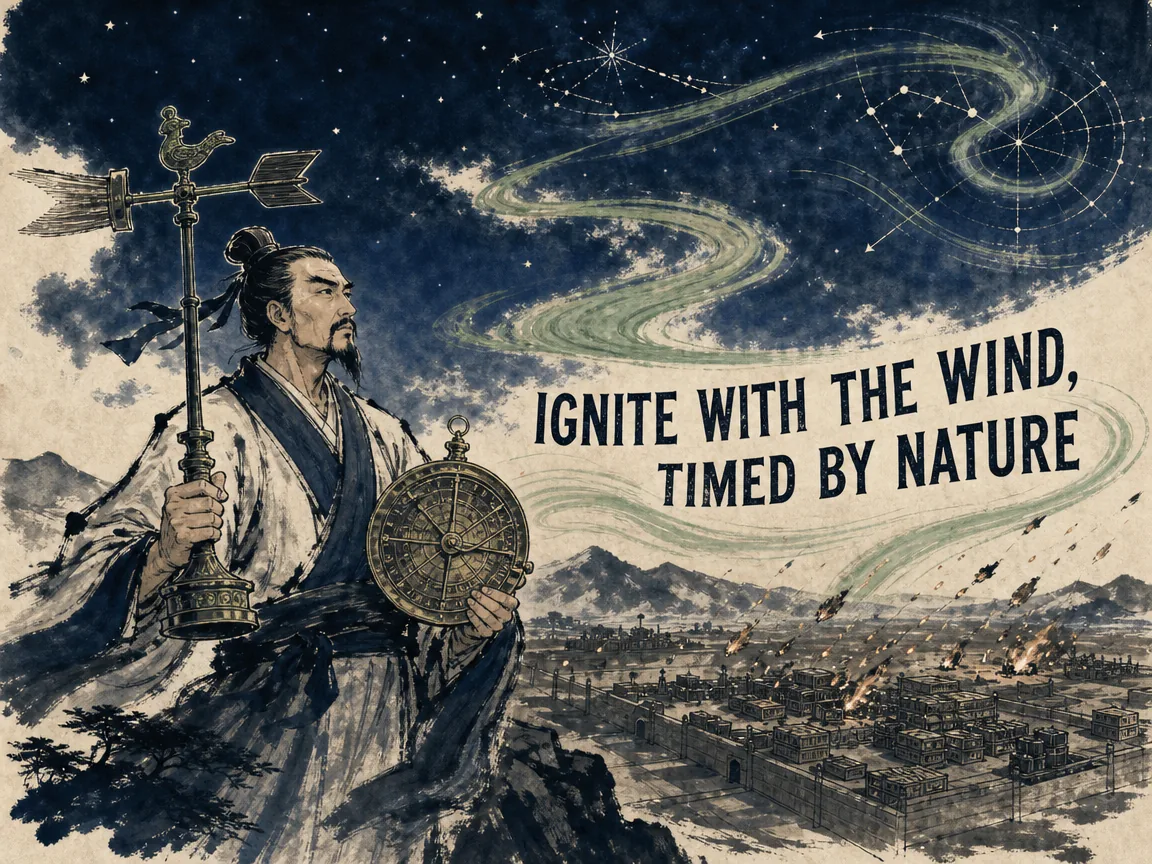
In order to carry out an attack, we must have means available. the material for raising fire should always be kept in readiness. There is a proper season for making attacks with fire, and special days for starting a conflagration. The proper season is when the weather is very dry; the special days are those when the moon is in the constellations of the Sieve, the Wall, the Wing or the Cross-bar; for these four are all days of rising wind.
In attacking with fire, one should be prepared to meet five possible developments: (1) When fire breaks out inside the enemy’s camp, respond at once with an attack from without. (2) If there is an outbreak of fire, but the enemy’s soldiers remain quiet, bide your time and do not attack. (3) When the force of the flames has reached its height, follow it up with an attack, if that is practicable; if not, stay where you are.
(4) If it is possible to make an assault with fire from without, do not wait for it to break out within, but deliver your attack at a favourable moment. Now the rebels have pitched their camp in the midst of thick grass which will easily burn when the wind blows. If we set fire to it at night, they will be thrown into a panic, and we can make a sortie and attack them on all sides at once, thus emulating the achievement of T’ien Tan.’ That same evening, a strong breeze sprang up; so Huang-fu Sung instructed his soldiers to bind reeds together into torches and mount guard on the city walls, after which he sent out a band of daring men, who stealthily made their way through the lines and started the fire with loud shouts and yells. Simultaneously, a glare of light shot up from the city walls, and Huang-fu Sung, sounding his drums, led a rapid charge, which threw the rebels into confusion and put them to headlong flight."
(5) When you start a fire, be to windward of it. Do not attack from the leeward. A wind that rises in the daytime lasts long, but a night breeze soon falls. In every army, the five developments connected with fire must be known, the movements of the stars calculated, and a watch kept for the proper days. Hence those who use fire as an aid to the attack show intelligence; those who use water as an aid to the attack gain an accession of strength.
By means of water, an enemy may be intercepted, but not robbed of all his belongings. Unhappy is the fate of one who tries to win his battles and succeed in his attacks without cultivating the spirit of enterprise; for the result is waste of time and general stagnation. Hence the saying: The enlightened ruler lays his plans well ahead; the good general cultivates his resources.
Move not unless you see an advantage; use not your troops unless there is something to be gained; fight not unless the position is critical. No ruler should put troops into the field merely to gratify his own spleen; no general should fight a battle simply out of pique. If it is to your advantage, make a forward move; if not, stay where you are. Anger may in time change to gladness; vexation may be succeeded by content.
But a kingdom that has once been destroyed can never come again into being; nor can the dead ever be brought back to life. Hence the enlightened ruler is heedful, and the good general full of caution. This is the way to keep a country at peace and an army intact. "Unless you enter the tiger’s lair, you cannot get hold of the tiger’s cubs."
孙子兵法中文原文与对照
【文言原文】
孫子曰:凡火攻有五:一曰火人,二曰火積,三曰火輜,四曰火庫,五曰火隊。行火必有因,烟火必素具。發火有時,起火有日。時者,天之燥也。日者,月在箕、壁、翼、軫也。凡此四宿者,風起之日也。
凡火攻,必因五火之變而應之:火發於內,則早應之於外;火發而其兵靜者,待而勿攻,極其火力,可從而從之,不可從則止;火可發於外,無待於內,以時發之;火發上風,無攻下風;晝風久,夜風止。凡軍必知有五火之變,以數守之。故以火佐攻者明,以水佐攻者強。水可以絕,不可以奪。
夫戰勝攻取,而不修其功者凶,命曰「費留」。故曰:明主慮之,良將修之,非利不動,非得不用,非危不戰。主不可以怒而興師,將不可以慍而致戰。合於利而動,不合於利而止。怒可以復喜,慍可以復悅,亡國不可以復存,死者不可以復生。故明主慎之,良將警之,此安國全軍之道也。
Follow the progression of the military treatise in the next tactical doctrine in The Use of Spies: Fivefold Intelligence, Foreknowledge, and the Web of Infiltration.
For a deeper comparative examination of these ideas, explore our related study on Tactical Dispositions: Becoming Invincible and Awaiting the Enemy’s Vulnerability.






