
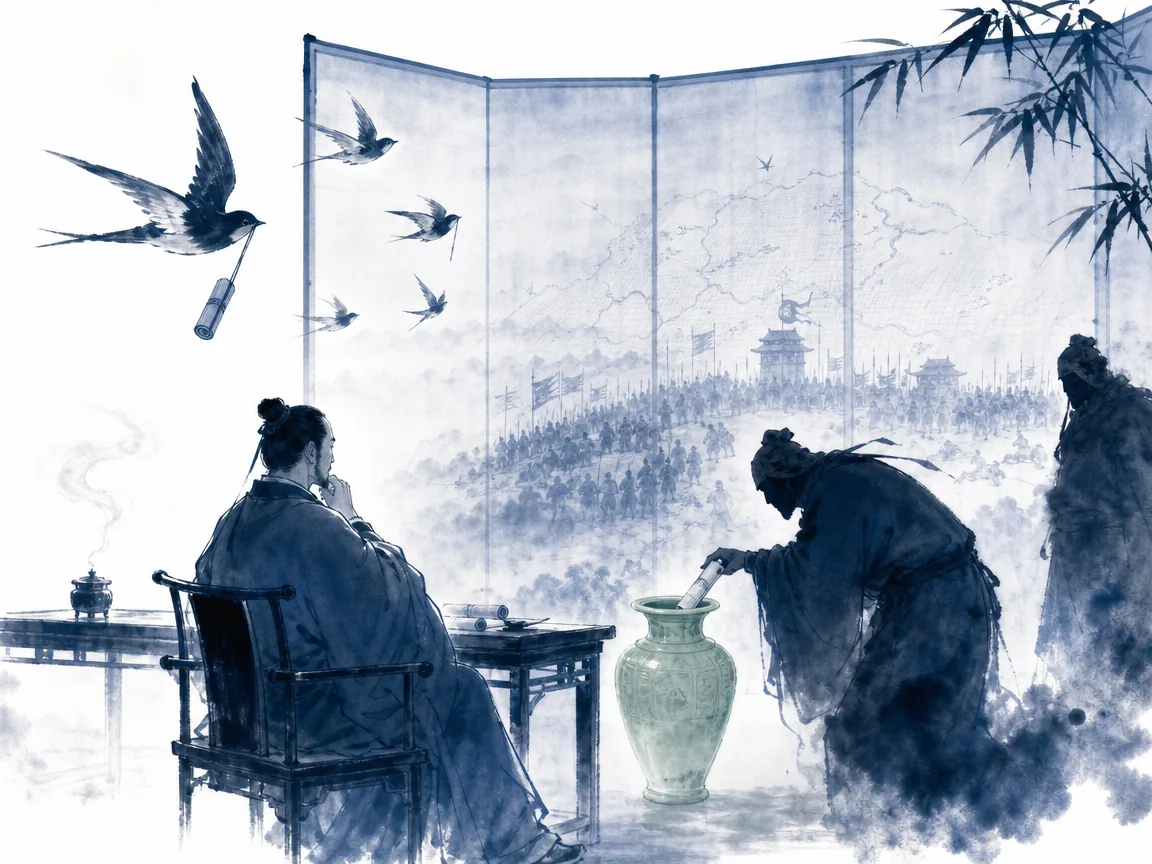
用間第十三
Core Insight: "What enables the wise sovereign and the good general to strike and conquer, and achieve things beyond the reach of ordinary men, is foreknowledge. Now this foreknowledge cannot be elicited from spirits; it cannot be obtained inductively from experience, nor by any deductive calculation. Knowledge of the enemy's dispositions can only be obtained from other men." — Sun Tzu, 用間第十三
「明君賢將,所以動而勝人,成功出於眾者,先知也。先知者,不可取於鬼神,不可象於事,不可驗於度,必取於人,知敵之情者也。」
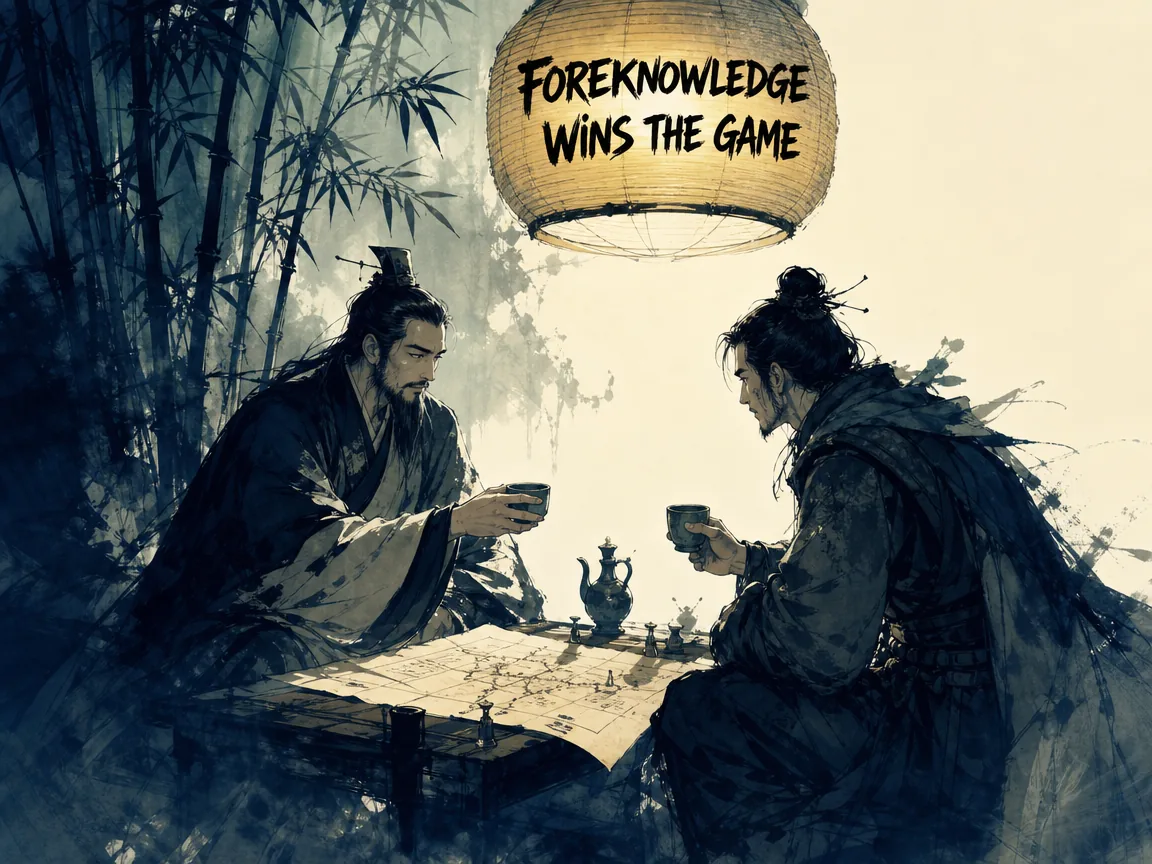
Expenditure of gold and lives across years of war pales before the value of timely human intelligence. Foreknowledge cannot be obtained from divination or superstitious conjecture; it comes solely from men through the five integrated classes of spies—a foundational perspective explored in Art of War Chapter 13. Discover how ancient strategy applies to modern competition in Where the Road Ends: What Ancient Chinese Strategy Teaches Us About Knowing What We Can Actually Do.
Art of War Chapter 13: Foreknowledge as the Sovereign Anchor
Art of War Chapter 13 (用間第十三) culminates Sun Tzu's entire strategic doctrine with intelligence gathering. Rather than relying on divination or abstract speculation, true foreknowledge is derived through human networks—specifically the double agent (counter-spy)—providing the essential informational foundation upon which all campaigns succeed.
Complete Chapter Translation: Modern Western Reading
Sun Tzŭ said: Raising a host of a hundred thousand men and marching them great distances entails heavy loss on the people and a drain on the resources of the State. The daily expenditure will amount to a thousand ounces of silver. There will be commotion at home and abroad, and men will drop down exhausted on the highways. As many as seven hundred thousand families will be impeded in their labor. In time of war, one of the families had to serve in the army, while the other seven contributed to its support. Thus, by a levy of 100,000 men (reckoning one able-bodied soldier to each family) the husbandry of 700,000 families would be affected.
Hostile armies may face each other for years, striving for the victory which is decided in a single day. This being so, to remain in ignorance of the enemy’s condition simply because one grudges the outlay of a hundred ounces of silver in honours and emoluments, is the height of inhumanity. One who acts thus is no leader of men, no present help to his sovereign, no master of victory. character for ‘prowess’ is made up of ‘to stay’ and ‘a spear’ (cessation of hostilities). Military prowess is seen in the repression of cruelty, the calling in of weapons, the preservation of the appointment of Heaven, the firm establishment of merit, the bestowal of happiness on the people, putting harmony between the princes, the diffusion of wealth."
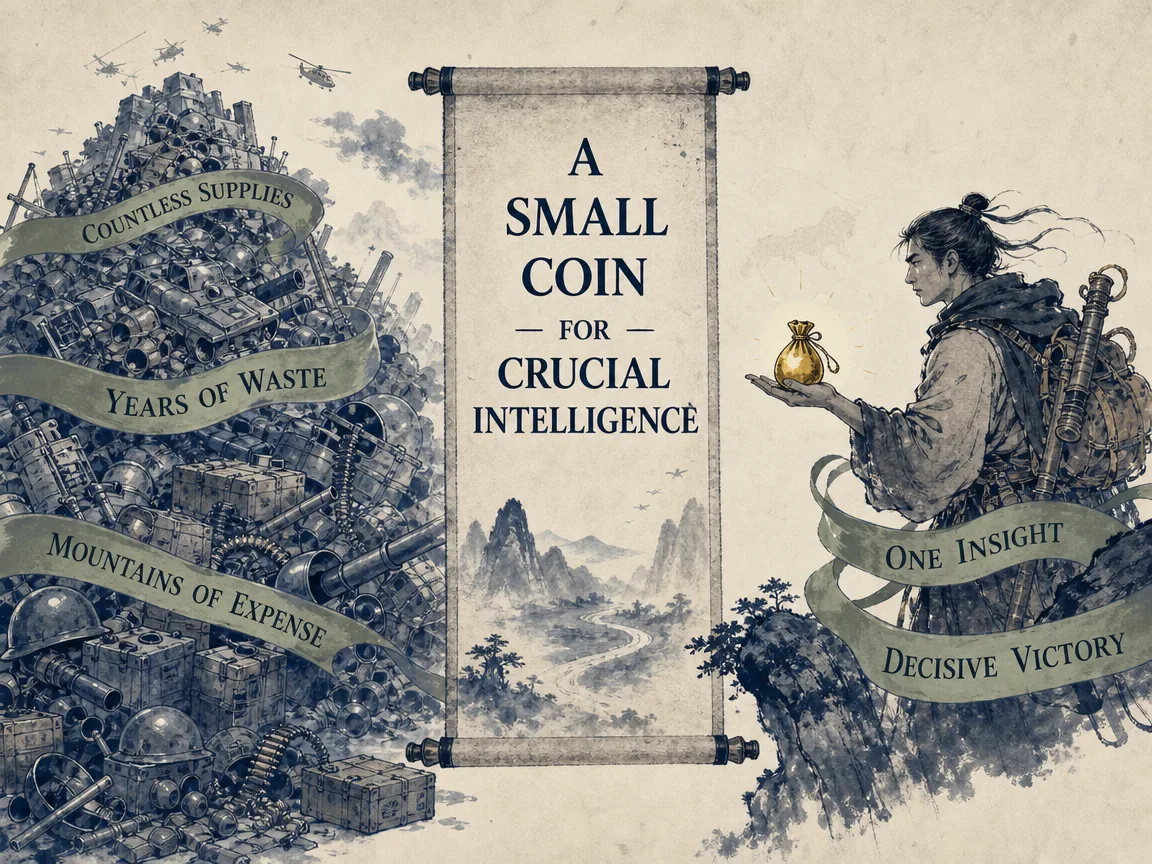
Thus, what enables the wise sovereign and the good general to strike and conquer, and achieve things beyond the reach of ordinary men, is foreknowledge. Now this foreknowledge cannot be elicited from spirits; it cannot be obtained inductively from experience, cannot be gained by reasoning from other analogous cases." nor by any deductive calculation.
Knowledge of the enemy’s dispositions can only be obtained from other men. Hence the use of spies, of whom there are five classes: (1) Local spies; (2) inward spies; (3) converted spies; (4) doomed spies; (5) surviving spies. When these five kinds of spy are all at work, none can discover the secret system. This is called "divine manipulation of the threads." It is the sovereign’s most precious faculty.
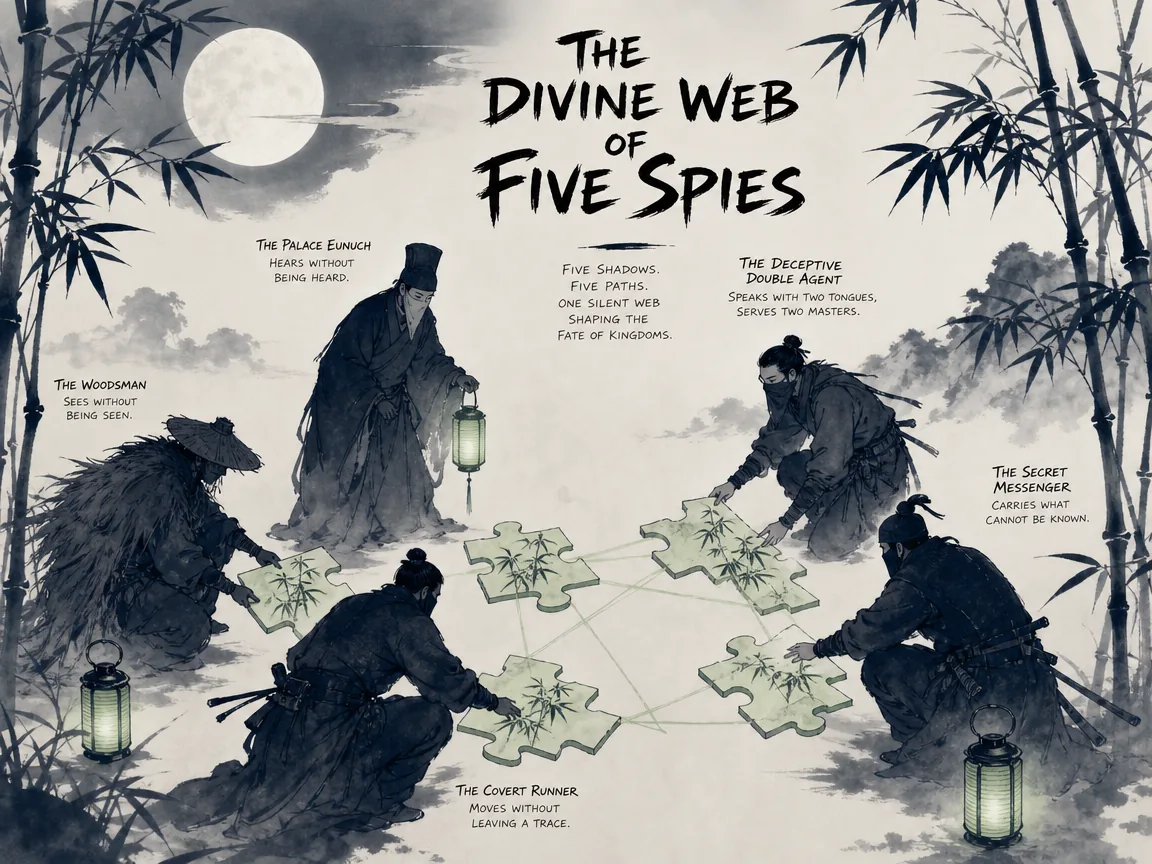
Having local spies means employing the services of the inhabitants of a district. Having inward spies, making use of officials of the enemy. Having converted spies, getting hold of the enemy’s spies and using them for our own purposes. Having doomed spies, doing certain things openly for purposes of deception, and allowing our own spies to know of them and report them to the enemy.
Surviving spies, finally, are those who bring back news from the enemy’s camp. sent Ta-hsi Wu to spy upon the enemy. He was accompanied by two other men. All three were on horseback and wore the enemy’s uniform. When it was dark, they dismounted a few hundred feet away from the enemy’s camp and stealthily crept up to listen, until they succeeded in catching the passwords used in the army. Then they got on their horses again and boldly passed through the camp under the guise of night-watchmen; and more than once, happening to come across a soldier who was committing some breach of discipline, they actually stopped to give the culprit a sound cudgeling! Thus they managed to return with the fullest possible information about the enemy’s dispositions, and received warm commendation from the Emperor, who in consequence of their report was able to inflict a severe defeat on his adversary."
Hence it is that with none in the whole army are more intimate relations to be maintained than with spies. None should be more liberally rewarded. In no other business should greater secrecy be preserved. Spies cannot be usefully employed without a certain intuitive sagacity. They cannot be properly managed without benevolence and straightforwardness.
Without subtle ingenuity of mind, one cannot make certain of the truth of their reports. Be subtle! be subtle! and use your spies for every kind of business. If a secret piece of news is divulged by a spy before the time is ripe, he must be put to death together with the man to whom the secret was told. are carried out," etc. Sun Tzŭ’s main point in this passage is: Whereas you kill the spy himself "as a punishment for letting out the secret," the object of killing the other man is only, as Ch’en Hao puts it, "to stop his mouth" and prevent news leaking any further. If it had already been repeated to others, this object would not be gained. Either way, Sun Tzŭ lays himself open to the charge of inhumanity, though Tu Mu tries to defend him by saying that the man deserves to be put to death, for the spy would certainly not have told the secret unless the other had been at pains to worm it out of him."
Whether the object be to crush an army, to storm a city, or to assassinate an individual, it is always necessary to begin by finding out the names of the attendants, the aides-de- camp, the door-keepers and sentries of the general in command. Our spies must be commissioned to ascertain these. The enemy’s spies who have come to spy on us must be sought out, tempted with bribes, led away and comfortably housed. Thus they will become converted spies and available for our service.
It is through the information brought by the converted spy that we are able to acquire and employ local and inward spies. It is owing to his information, again, that we can cause the doomed spy to carry false tidings to the enemy. Lastly, it is by his information that the surviving spy can be used on appointed occasions. The end and aim of spying in all its five varieties is knowledge of the enemy; and this knowledge can only be derived, in the first instance, from the converted spy. Hence it is essential that the converted spy be treated with the utmost liberality.
Of old, the rise of the Yin dynasty who had served under the Hsia. Likewise, the rise of the Chou dynasty was due to Lü Ya who had served under the Yin. Hence it is only the enlightened ruler and the wise general who will use the highest intelligence of the army for purposes of spying and thereby they achieve great results. Spies are a most important element in war, because on them depends an army’s ability to move. "Aids to Scouting," p. 2. "Marshal Turenne," p. 311.
孙子兵法中文原文与对照
【文言原文】
孫子曰:凡興師十萬,出征千里,百姓之費,公家之奉,日費千金,內外騷動,怠于道路,不得操事者,七十萬家。相守數年,以爭一日之勝,而愛爵祿百金,不知敵之情者,不仁之至也,非人之將也,非主之佐也,非勝之主也。故明君賢將,所以動而勝人,成功出於眾者,先知也。先知者,不可取於鬼神,不可象於事,不可驗於度,必取於人,知敵之情者也。
故用間有五:有鄉間,有內間,有反間,有死間,有生間。五間俱起,莫知其道,是謂「神紀」,人君之寶也。鄉間者,因其鄉人而用之;內間者,因其官人而用之;反間者,因其敵間而用之;死間者,為誑事於外,令吾間知之,而傳於敵間也;生間者,反報也。
故三軍之事,莫親於間,賞莫厚於間,事莫密於間,非聖智不能用間,非仁義不能使間,非微妙不能得間之實。微哉!微哉!無所不用間也。間事未發而先聞者,間與所告者皆死。
凡軍之所欲擊,城之所欲攻,人之所欲殺,必先知其守將、左右、謁者、門者、舍人之姓名,令吾間必索知之。必索敵人之間來間我者,因而利之,導而舍之,故反間可得而用也;因是而知之,故鄉間、內間可得而使也;因是而知之,故死間為誑事,可使告敵;因是而知之,故生間可使如期。五間之事,主必知之,知之必在於反間,故反間不可不厚也。
昔殷之興也,伊摯在夏;周之興也,呂牙在殷。故明君賢將,能以上智為間者,必成大功。此兵之要,三軍之所恃而動也。
Follow the progression of the military treatise in the next tactical doctrine in Laying Plans: The Five Factors, Temple Calculations, and the Art of Deception.
For a deeper comparative examination of these ideas, explore our related study on Terrain: The Six Grounds, Six Calamities, and the Sovereign Nature of Independent Command.






