
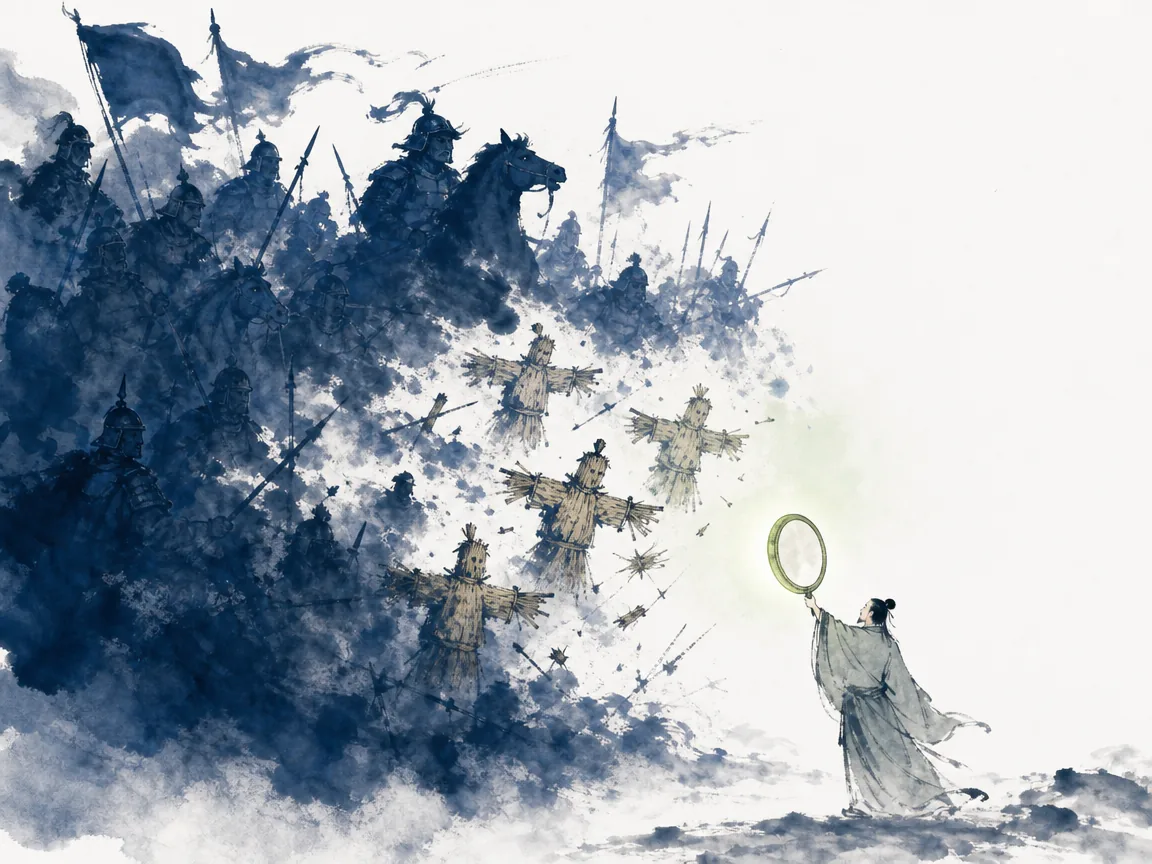
You are not short on information. That is the first mistake most people make when they try to understand what is going on. The real problem is that the information you have is rarely complete, often filtered, and sometimes deliberately shaped to make you see one thing when another is true. A news headline feels like knowledge. A dashboard shows clean numbers that ignore hidden risks. A competitor's public statements sound confident while carefully concealing their real position. You walk into a decision with a stack of facts, yet the ground beneath those facts may be thinner than you think.
This is not a new observation, and it is not a modern invention born of social media algorithms or data-wash in corporate strategy rooms. Over two thousand years ago, a Chinese military strategist named Sun Tzu wrote about exactly this problem. His answer was not to collect more information. It was to change the way you relate to the information you already have. In a world where everyone is competing to shape your perception, his advice remains uncomfortably useful—a foundational perspective explored in Art of War Chapter 3.
Art of War Chapter 3: The Trap of Feeding Your Certainty
The Israeli psychologist Daniel Kahneman described a mental habit that explains why incomplete information feels so convincing. When faced with uncertainty, the human brain does not typically sit back and say, "I don't have enough here to be sure." It does something else: it builds the most coherent story it can from whatever data is immediately available, and it treats that story as if it were complete [3]. Kahneman called this tendency WYSIATI — "What You See Is All There Is" — and he was careful to note that it is not a deliberate error but a built-in feature of how quick thinking works [3]. System 1, as he labeled it, generates the best narrative possible from the information at hand, and it does not stop to flag the gaps [3].
That is why confidence and accuracy are so often poorly matched. A decision-maker can look at a thin set of facts and feel entirely certain, while someone who has been exposed to more contradictory evidence may actually feel less sure. Certainty is not a reliable indicator that you have the whole picture. It is usually a sign that your brain has successfully smoothed over the cracks.
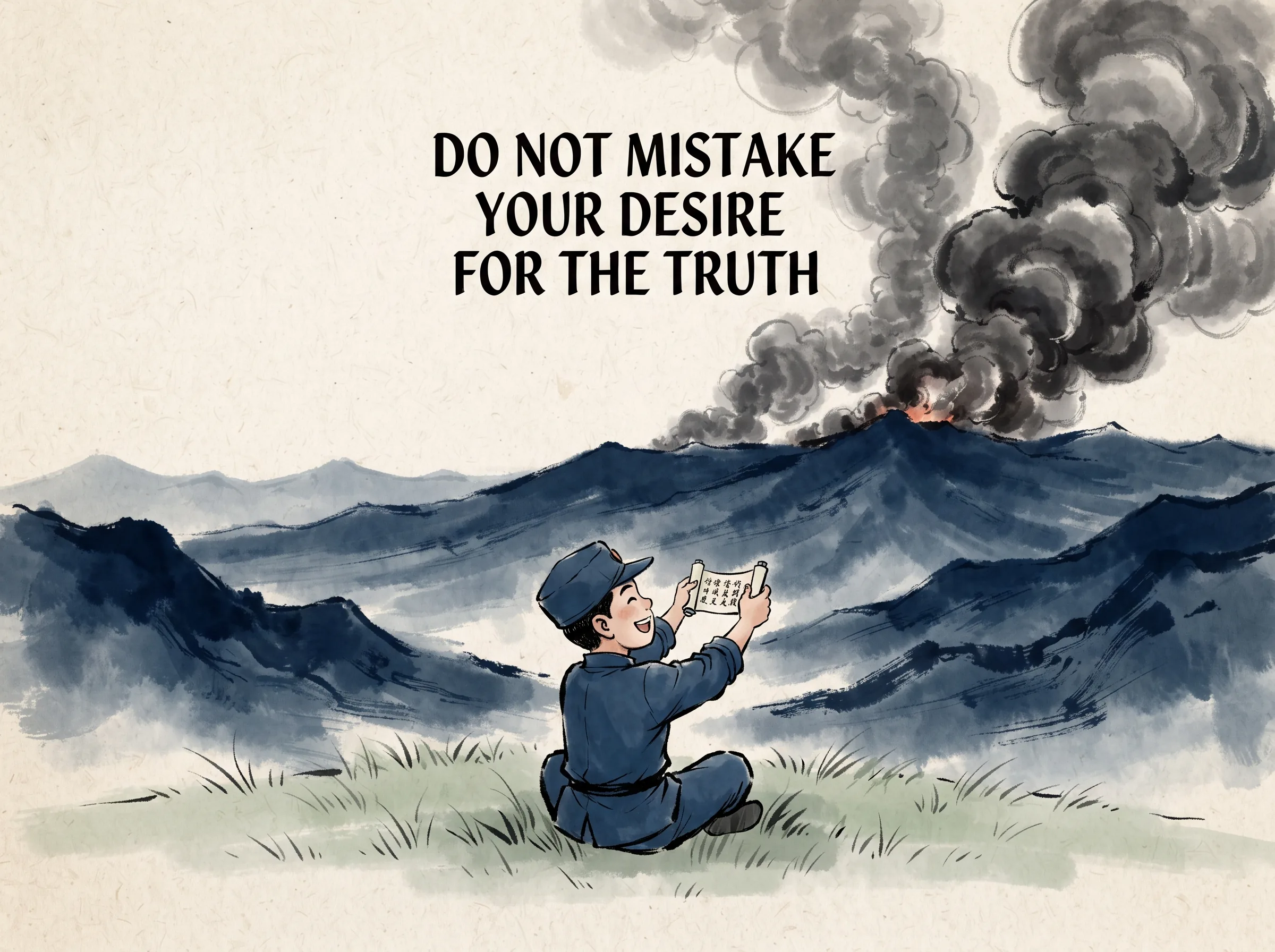
Sun Tzu understood this mechanism long before cognitive psychology had a name for it. He did not assume that people who entered a conflict had access to reality. He assumed they would enter it carrying stories — stories constructed from fragments, from what their scouts reported, from what their own wishes encouraged them to believe. His entire strategic system is built on the premise that perception is fragile and that the most dangerous form of blindness is not ignorance but convinced ignorance.
What Sun Tzu Meant by Knowing
One of the most quoted lines in classical Chinese strategy comes from Art of War Chapter 3 of The Art of War, and it is often treated as a simple slogan: "Know yourself and know your enemy, and you will not be imperiled in a hundred battles; know yourself but not your enemy, and for every victory you gain you will also suffer a defeat; know neither yourself nor your enemy, and you will be imperiled in every battle" [2]. The original text closes with the warning that one will be "imperiled in every engagement" (每战必殆, měi zhàn bì dài) [2]. This is not a boastful claim that perfect knowledge guarantees victory. It is a warning about the cost of partial knowledge.
What makes this passage unusually deep for its time is the way Sun Tzu frames knowing as a discipline rather than a given. He does not assume that information is freely available or that the world reveals itself honestly. In Chapter 1, he writes that before any battle is fought, the side that conducts thorough temple calculations is likely to win, while the side that approaches conflict with shallow assessment is likely to lose [2]. The phrase "temple calculations" (庙算, miào suàn) refers to the strategic deliberations held in the ancestral temple before war, where leaders were expected to weigh every variable — terrain, morale, logistics, timing, and political consequence — rather than relying on hope or impulse [2].
Knowing, in Sun Tzu's framework, is therefore not simply collecting data. It is an active process of testing your own assumptions against reality and accepting that your initial read of a situation is probably incomplete. The strategist who understands this does not wait for perfect information. They prepare for the fact that information will always be imperfect.
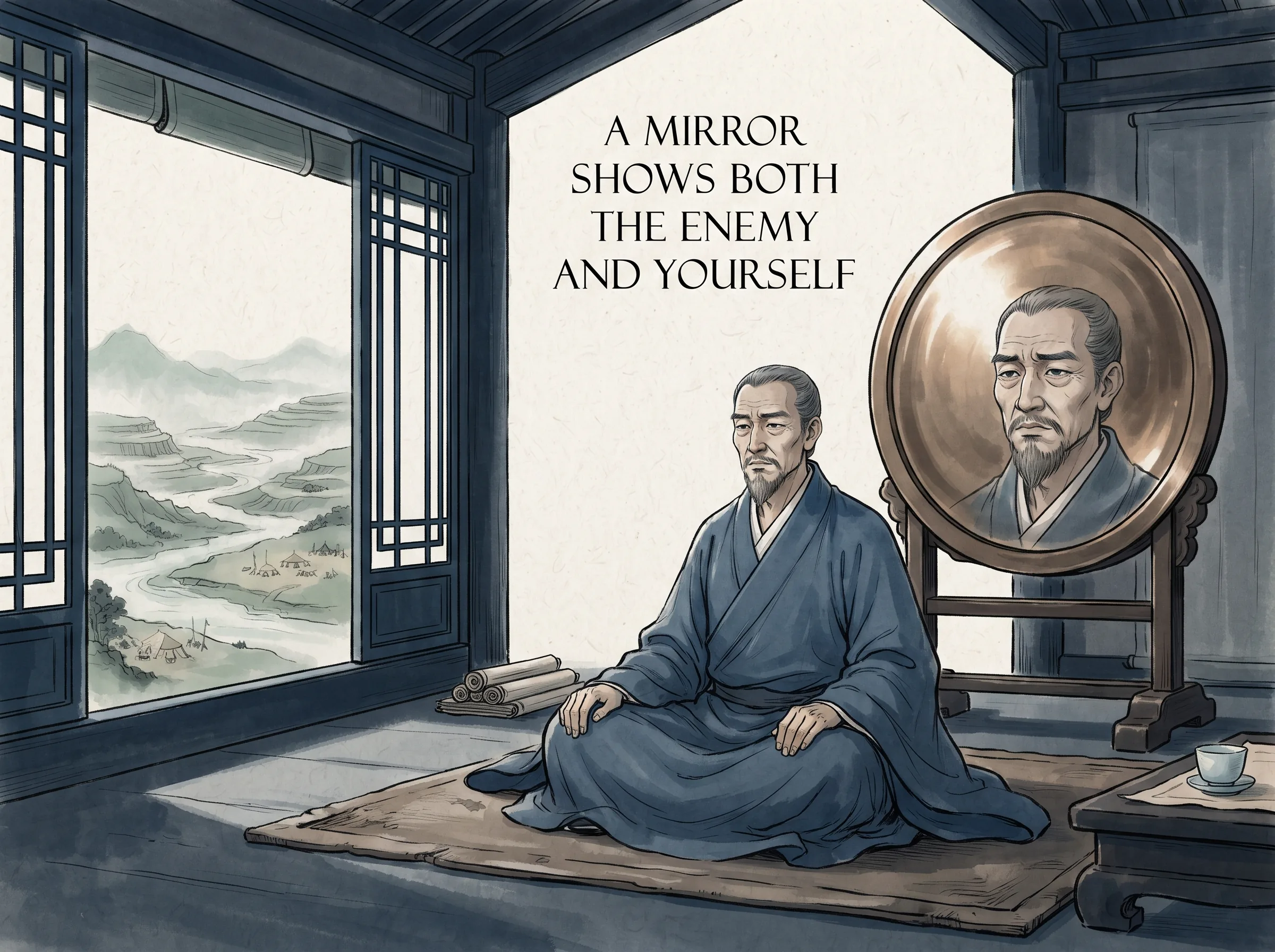
There is a second dimension to knowing that Sun Tzu treats with equal seriousness. In Chapter 1, he writes plainly that " warfare is based on deception" [2]. This line is often misunderstood as an endorsement of reckless dishonesty. In the context of his text, it means something sharper: opponents will actively shape what you see. They will hide strength and display weakness, feign disorder when they are organized, and appear distant when they intend to strike [2]. If you assume your information is neutral, you are already vulnerable to being led astray.
The danger is double-layered. First, the world is noisy and partial. Second, other people may be designing your view of the world. Sun Tzu does not offer a magic lens that removes distortion. He offers a practice: assume distortion exists, test your perceptions, and refuse to let a satisfying story replace careful inquiry.
When the Fog Comes Without a Liar
Even if no one were trying to deceive you, decisions would still be made under uncertainty. This is the point Carl von Clausewitz made about the inherent friction and incomplete signals that characterize real conflict, often described later as the fog of war [4]. The term "fog of war" itself is a later simplification of Clausewitz's broader point about uncertainty and delay in military operations, and historians note that his writings emphasize the difficulty of discerning truth amid noise and lagging information rather than offering a single catchphrase [4]. The lesson is the same regardless of terminology: incomplete information is not an anomaly caused by bad actors; it is a default condition. For the original military treatise and commentary, read the complete strategic translation and classical commentary of Attack by Stratagem: Subduing the Enemy Without Fighting and the Levels of Engagement.
The Battle of Waterloo in 1815 illustrates this clearly. After engaging Prussian forces at Ligny, Napoleon ordered Marshal Grouchy to pursue them and press the advantage [4]. The orders were explicit, but the battlefield situation changed rapidly. Reports arrived late, sometimes contradicting one another, and the physical conditions — rain, disrupted communications, the sheer confusion of maneuver — made real-time clarity nearly impossible. Grouchy continued marching toward Wavre even as he could hear cannon fire in the distance, and he declined to act on advice from subordinates who suggested moving toward the sound of battle instead [4].
Historical accounts confirm that Grouchy heard the Waterloo cannons and refused recommendations to redirect his corps, but modern analysts differ on whether that refusal was primarily an anchoring bias, a strict reading of orders, or a combination of factors [4]. What the episode demonstrates without ambiguity is that even commanders with substantial resources and experienced staff operate under persistent informational deficits. Napoleon himself misread Prussian movements, underestimated Wellington, and overestimated what Grouchy could realistically accomplish [4]. The failure at Waterloo was not caused by a single lie. It was caused by a cascade of partial signals, delayed reports, and overconfidence in incomplete narratives.
Sun Tzu's response to this kind of reality is not to panic about uncertainty. It is to build habits that reduce the damage uncertainty causes. Temple calculation is one such habit: a disciplined pre-decision review that forces you to confront what you do not know before you commit to action. Another is the recognition that your opponent may be feeding you information designed to be convincing rather than true. When you accept both possibilities, you stop treating confidence as proof and start treating it as a signal that you need to look harder.
New Coke and the Cost of Measuring Only What Is Visible
The tension between visible data and invisible reality is not limited to military history. It shows up repeatedly in commercial decision-making, and few cases illustrate it as cleanly as the launch of New Coke in 1985.
The Coca-Cola Company changed its flagship formula after conducting taste tests involving nearly 200,000 consumers, in which the new formula ("New Coke", 新配方) was preferred [5]. From the outside, this looked like a decision supported by overwhelming evidence. Thousands of data points, repeated testing, measurable preference. On paper, the logic was sound.
What the company did not capture in those tests was the emotional bond consumers felt with the original product — something they did not want anyone, including the company itself, to alter [5]. Taste tests measured a sip, not the experience of drinking a full can. They measured immediate preference, not cultural meaning. They measured a chemical reaction on the tongue, not a decades-old relationship between a brand and its consumers. Within days of the launch, consumer reactions revealed the gap. Phone inquiries to the company's consumer hotline surged to around 1,500 calls per day, compared with roughly 400 calls daily before the change [5]. The backlash was swift and visible, and the company reversed course, reintroducing the original formula as Coca‑Cola Classic [5].
New Coke is frequently remembered as a product failure. It was, more precisely, a perception failure. The company gathered impressive quantities of visible intelligence and mistaken for completeness what was actually a narrow slice of a much larger picture. Sun Tzu would not have been surprised. He wrote that victory belongs to those who calculate thoroughly before engaging [2]. The converse is equally true: defeat often belongs to those who calculate narrowly and mistake scale for depth.
Practical Principles for Decision-Making Under Uncertainty
Ancient Chinese strategy does not promise clarity. It offers tools for functioning without it. Several of those tools translate directly into modern decision-making habits.
Label your uncertainties explicitly. When you reach a conclusion, write down what you are assuming, what you are guessing, and what you simply do not know. Kahneman's work shows that the brain prefers a seamless story, but a seamless story is not the same as a reliable one [3]. Naming your blind spots does not weaken your position. It makes your uncertainty visible so you can plan around it instead of being blindsided by it.
Seek disconfirming evidence before committing. It is easy to gather information that supports a preferred conclusion. It is harder — and more useful — to look for information that contradicts it. Sun Tzu's emphasis on knowing your enemy presupposes that your initial perception is likely wrong or incomplete [2]. Actively testing that assumption reduces the risk of walking into a self-reinforcing loop.
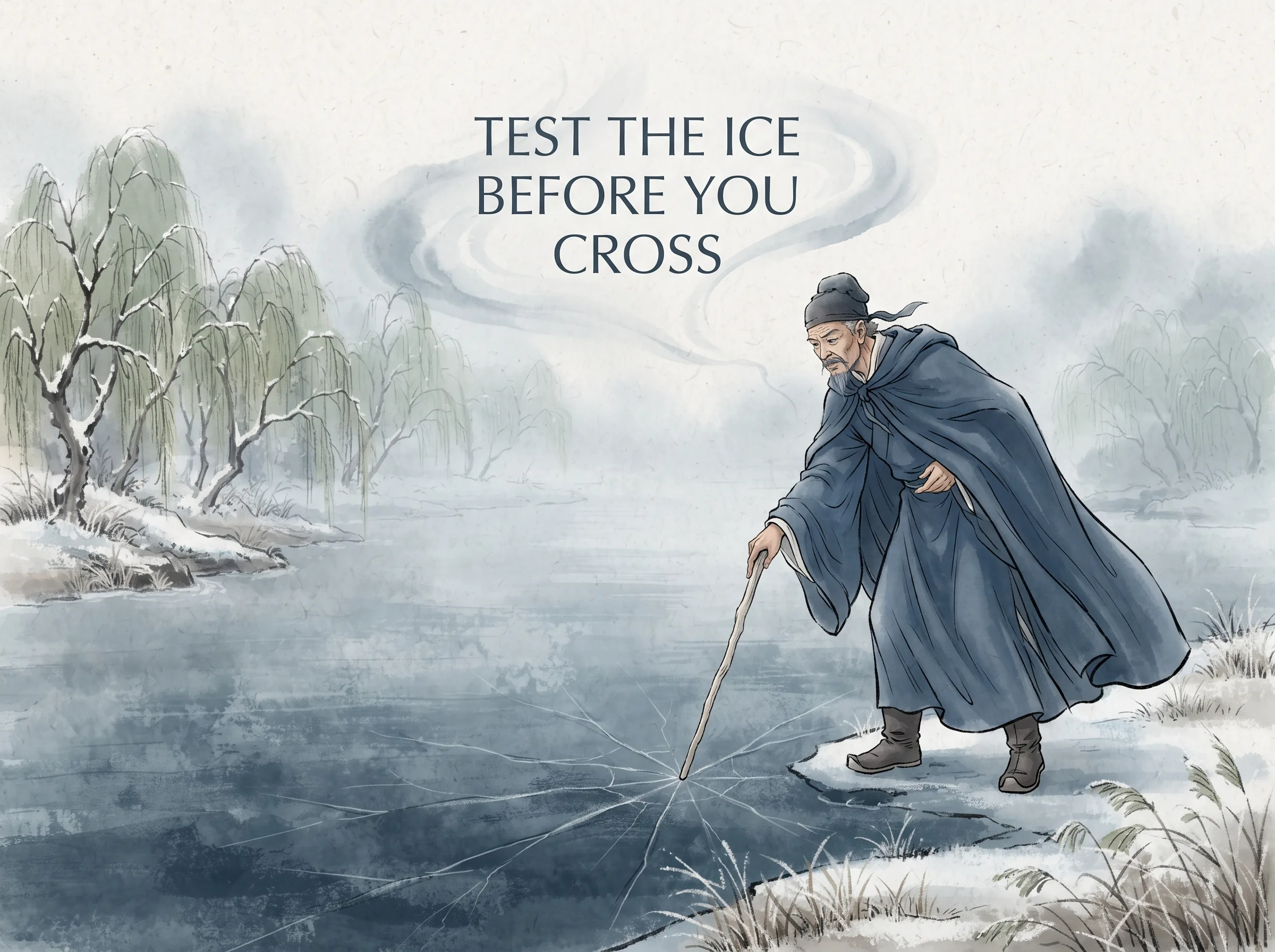
Assume some of what you see may be designed. If Sun Tzu is right that "warfare is based on deception" [2], then competitors, algorithms, institutions, and media environments may be shaping your input in ways that serve their interests rather than yours. This does not mean every signal is manipulated. It means you should not treat every signal as neutral. Ask who benefits from your current interpretation and whether alternative readings are possible.
Build decision habits that tolerate ambiguity. Most people are trained to close loops quickly — to decide, commit, and move on. Sun Tzu's framework suggests a different rhythm: assess, question, reassess, then act. Temple calculation is not procrastination. It is the practice of slowing down just long enough to notice what you are missing [2].
Treat your own assumptions with the same scrutiny you give external data. New Coke failed partly because the company trusted its numbers without interrogating what those numbers could not measure [5]. Napoleon lost at Waterloo partly because his staff filled gaps in reporting with confident assumptions rather than doubt [4]. The antidote to external deception is internal honesty. If you do not question your own reasoning, no amount of outside information will save you.
These principles do not require mystical insight or special access to hidden truths. They require a shift in posture: from "I have enough information" to "I have some information, and I need to check what I am missing."
Summary and Next Steps
The world rarely hands us complete, unbiased information. It hands us fragments, some of which are shaped by people who want us to draw specific conclusions, and some of which are distorted by the natural limits of communication, timing, and perception. Kahneman's research shows that our minds are wired to turn fragments into convincing stories [3]. Clausewitz observed that even without deception, the fog of conflict obscures reality [4]. Sun Tzu advised two thousand years ago that thorough calculation before action separates those who endure from those who do not [2]. The New Coke case demonstrates how easily organizations can mistake visible data for total understanding [5].
Ancient Chinese wisdom does not solve the problem of incomplete information. It offers something more realistic: a set of practices for navigating it without collapsing into false certainty. The core shift is simple but demanding. Stop treating confidence as proof. Start treating your current understanding as a draft that needs revision. And remember that the part of the picture you cannot see is often the part that decides the outcome.
What to do next:
- Before your next important decision, write down three things you are assuming and one piece of evidence that could prove each wrong.
- Review a past decision where you felt certain. Identify what you did not know at the time and how that unknown may have changed the result.
- When evaluating information from competitors, media, or advisors, ask who gains if you accept it at face value.
- Consider rereading Sun Tzu's Art of War with attention to Chapters 1 and 3, focusing on how he frames knowing as practice rather than privilege.
FAQ
Is Sun Tzu's advice about deception relevant outside of military contexts? Yes. Sun Tzu's observation that "warfare is based on deception" appears in Chapter 1 of The Art of War and describes a structural feature of competition rather than a call for literal lying [2]. In business, politics, and everyday information environments, competitors and algorithms shape what you see. Recognizing that dynamic helps you evaluate sources more carefully rather than assuming your information is neutral.
Does "know yourself and know your enemy" mean you need perfect information? No. The passage in Chapter 3 emphasizes that partial knowledge carries real risks, not that perfect knowledge is possible or required [2]. Sun Tzu's point is that decision-makers who acknowledge their limitations and test their assumptions perform better than those who confuse confidence with accuracy.
How is Sun Tzu's idea of temple calculation different from modern risk analysis? Temple calculation predates formal risk models by centuries and focuses on the habit of systematic pre-decision assessment rather than quantitative forecasting alone [2]. Modern risk analysis often produces numerical estimates that can create a false sense of precision. Sun Tzu's framework reminds us to question the quality and scope of the inputs before trusting the output.
Can ancient strategy really help with modern problems like AI-generated content or algorithmic bias? Not in a direct, technical sense. But the underlying pattern — that information environments are often shaped by competing interests and that partial signals feel convincing — is highly relevant. Sun Tzu's warnings about deception and Kahneman's findings about cognitive shortcuts both suggest that critical evaluation of sources and explicit acknowledgment of uncertainty are essential habits in any era [2]****[3].
To explore these themes from another angle, read our related reflection on Why Knowing What to Do Isn’t Enough: Sun Tzu’s Hidden Lesson on Adaptation.
For a deeper comparative examination of these ideas, explore our related study on Waging War: The Economic Burden, Swift Operations, and Foraging on the Enemy.
Sources & Further Reading
[1] Sources cited in this article
[2] Sun Tzu, The Art of War (Chapters 1 and 3), via Chinese Wikisource — primary classical text containing passages on "temple calculations" (庙算, miào suàn) and "knowing the enemy and knowing yourself" (知彼知己, zhī bǐ zhī jǐ)
[3] Gallup, "The Truth About How We Think" — interview with Daniel Kahneman discussing the WYSIATI principle
[4] John Codman Ropes, The Campaign of Waterloo (Project Gutenberg) — historical account of Napoleon's orders to Grouchy and events at Waterloo
[5] The Coca-Cola Company, "New Coke: The Most Memorable Marketing Blunder Ever?" — official company history page documenting the 200,000-consumer taste tests and consumer emotional response






