
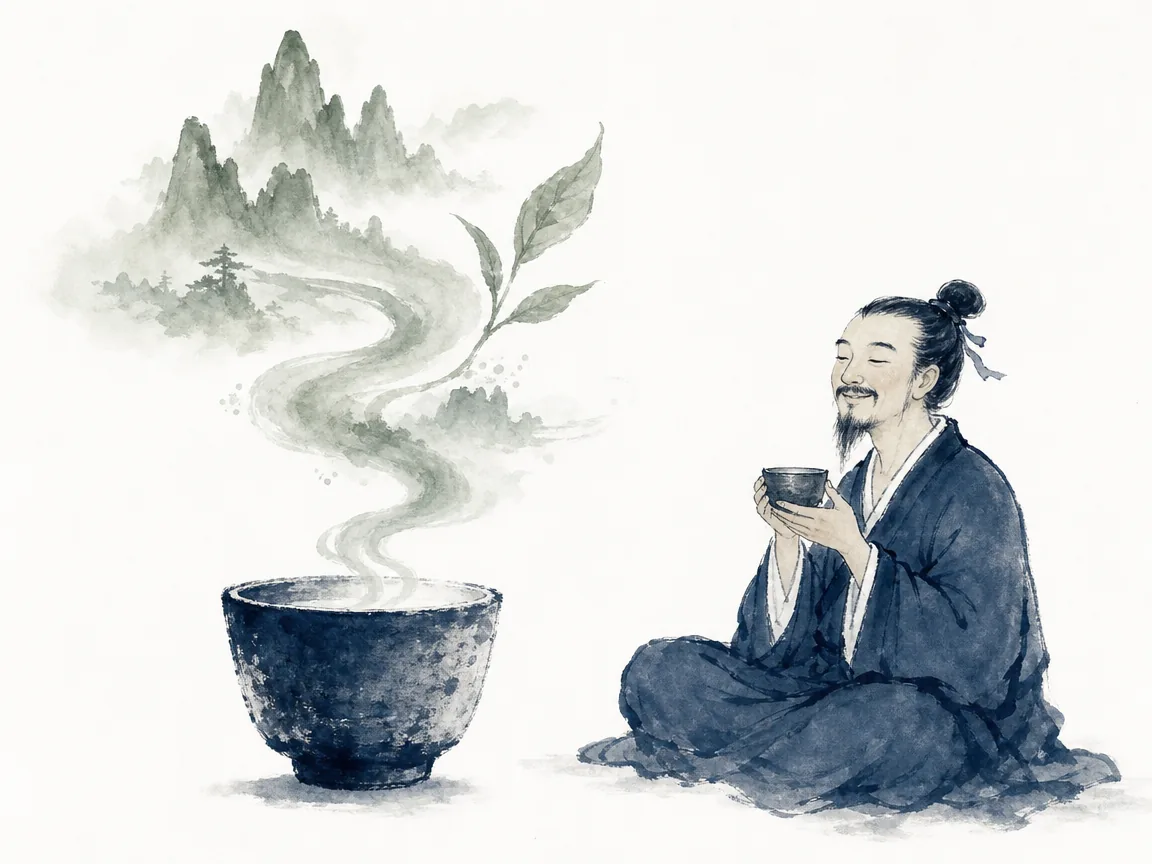
Most of us reach for our morning drink almost on autopilot. The kettle boils, the bag steeps, the cup goes straight to the keyboard. For many people living fast-paced lives, tea or coffee has become a functional ritual—something to wake up, something to get through, something consumed while already thinking about the next task. It is easy to forget that for thousands of years, Chinese culture treated tea very differently. The tradition was not about efficiency. It was about attention, slowness, and a quiet kind of presence.
What is striking about the Chinese tea tradition is not merely that it survived major historical upheavals, but that it adapted without losing its philosophical core. From the Han dynasty, when tea was sometimes eaten as food or used medicinally, through the elaborate whisked tea ceremonies of the Song dynasty, and eventually to the simple loose-leaf infusion method that most of the world still uses today, each era shaped tea to fit its own context [1]. The method changed. The intention behind it often did not—a foundational perspective explored in Chinese Tea Philosophy.
This raises a question that feels surprisingly relevant today: what can a tradition that took millennia to develop teach us about living with purpose, simplicity, and presence? The answer, perhaps, is found not in any single rulebook but in the way Chinese thinkers—Daoist, Confucian, and Buddhist—allowed tea to become a mirror for how we choose to live.
Chinese Tea Philosophy: Three Traditions in One Cup
Chinese tea culture has never belonged to just one philosophical school. Over time, Daoism, Confucianism, and Chan (Zen) Buddhism each left their imprint on how tea is understood, prepared, and shared. These are interpretive connections rather than claims that ancient tea drinkers sat down to write self-help guides. Still, the philosophical echoes are real and instructive.
Daoism contributes the ideals of naturalness (ziran, 自然, “being so of itself”) and simplicity (jian, 简, “the simple or unadorned”). The Daoist sensibility values effortless action (wuwei, 无为, “non-forcing”) and a return to what is unadorned. This can be seen in the Ming dynasty shift from complex compressed tea cakes to simple loose leaves—a move that many historians describe as a quiet return to simplicity rather than a rejection of refinement [1]. The point is not that complexity is bad, but that there is wisdom in stripping away what is unnecessary and letting things unfold in their own time.
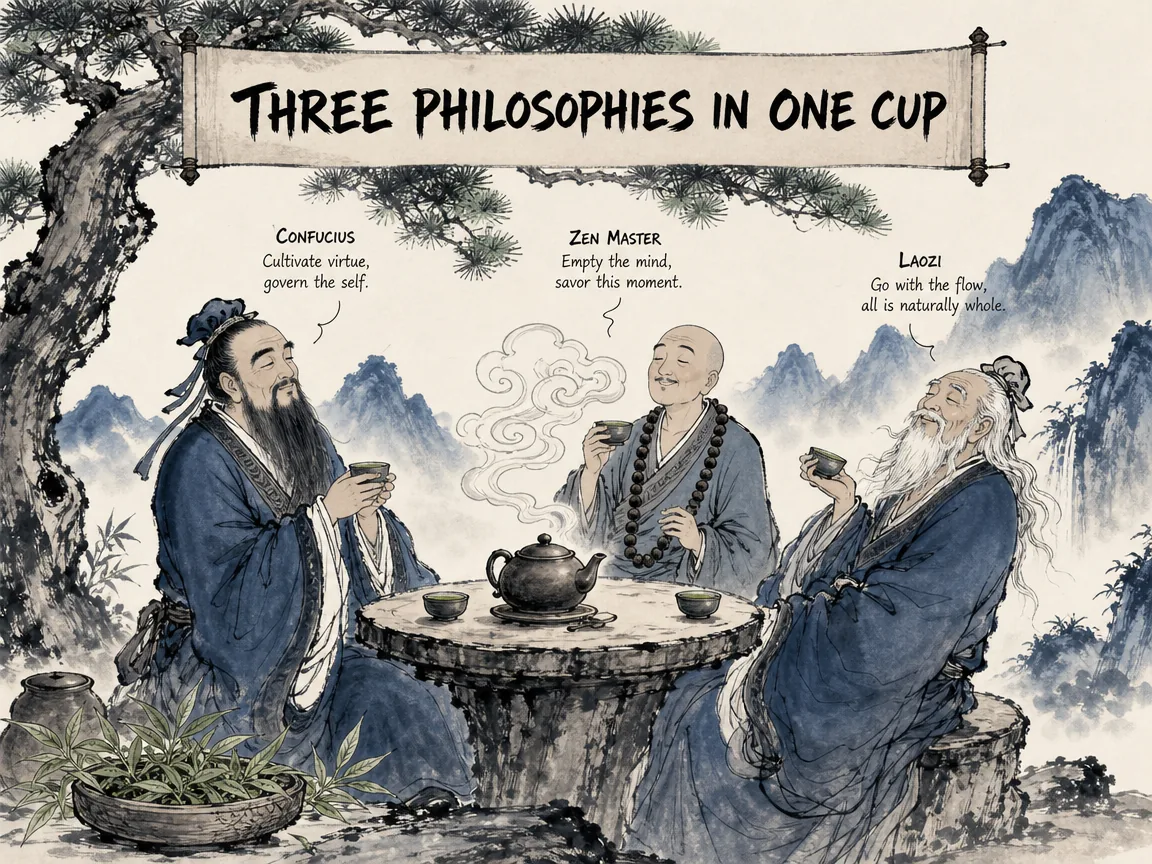
Confucianism brings the emphasis on harmony, ritual, and self-cultivation through ritual propriety (li, 礼, “appropriate and respectful conduct”). Tea, in this reading, is a medium for connection and respect. Sharing tea becomes an act of care—a way of gathering, honoring others, and practising attentiveness within relationship. The social dimension of tea is perhaps its most accessible feature: a cup offered to someone else is, in a small but real way, a gesture of human warmth.
Chan Buddhism introduces the idea that the practice of tea and the practice of mindfulness are not separate. The saying “Chan and tea share one taste” (chan cha yi wei, 禅茶一味, meaning that tea practice and meditation embody the same attentive awareness) reflects a tradition in which the stillness required to prepare and drink tea well is the same stillness cultivated on the meditation cushion [1]. This does not mean tea alone can replace disciplined practice, but it does suggest that ordinary moments can be infused with awareness.
These three currents—Daoist simplicity, Confucian relational harmony, and Buddhist mindfulness—do not always merge seamlessly. But together they offer a remarkably complete picture of what a daily practice like tea can carry.
How Tea Changed—and What That Teaches Us
If we trace the history of Chinese tea drinking, one pattern becomes clear: the method keeps changing, but the intention persists.
During the Han dynasty, tea was sometimes eaten as a vegetable or boiled with other ingredients much like a medicinal decoction [1]. By the Tang dynasty, a more refined method had emerged. Lu Yu (陆羽, Lù Yǔ) described a cake-tea decoction method (jian cha, 煎茶, literally “boiling tea”), in which tea cakes were roasted, ground, and boiled with water—sometimes with a pinch of salt—rather than steeped as loose leaves would later be [1]. The Song dynasty pushed refinement further, developing a whisked powdered-tea method (dian cha, 点茶, literally “adding water to tea”), in which powdered tea was beaten into a frothy surface. Song Huizong, who ruled from 1100 to 1126, wrote an entire treatise on tea, the Treatise on Tea in the Daguan Era (Daguan Chalun, 大观茶论), detailing the precise movements needed to achieve the ideal foam [2]. Examine this artistic principle further through the classical aesthetic philosophy of Why Chinese Painting Chooses Awe Over Love — And What It Teaches Us About Modern Anxiety.
The most dramatic turning point arrived in the Ming dynasty. In 1391, the Hongwu Emperor issued an edict abolishing the production of ornate tribute tea cakes and ordering that only young tea buds be offered instead [1]. This policy shift made loose-leaf tea far more common and effectively established the brewing method—pouring hot water over whole leaves—that most people recognise today.
Each transition could be read as a story of adaptation. The Song dynasty valued artistic display and competition; the Ming dynasty moved toward unadorned simplicity. Neither version was inherently superior. The deeper lesson, perhaps, is that wisdom is not about preserving a single correct form but about capturing the essence in whatever form the present moment allows. We can honour tradition while still making it our own.
Lu Yu and the Way of Tea
No discussion of Chinese tea culture is complete without Lu Yu (陆羽, Lù Yǔ, 733–804), known to later generations as the Tea Sage (Cha Sheng, 茶圣). His Classic of Tea (Cha Jing, 《茶经》) is widely regarded as the first systematic work devoted entirely to tea [1]. Before Lu Yu, tea was a habit, a medicine, a drink of the marketplace and the countryside. After him, it became a subject worthy of philosophical attention and artistic refinement.
The Classic of Tea does not read like a modern instruction manual. It moves through ten chapters covering everything from the origins of tea to the tools needed, the water to use, and the spirit with which tea should be prepared. In Chapter Six, “Drinking” (Liu zhi Yin, 六之饮), Lu Yu writes that tea drinking originated with Shennong and was known among the disciples of the Duke of Zhou—a traditional origin story rather than a verifiable historical claim [1]. What matters more for our purposes is that Lu Yu treated the details seriously: the quality of the water, the timing of the boil, the state of mind of the person pouring the tea.
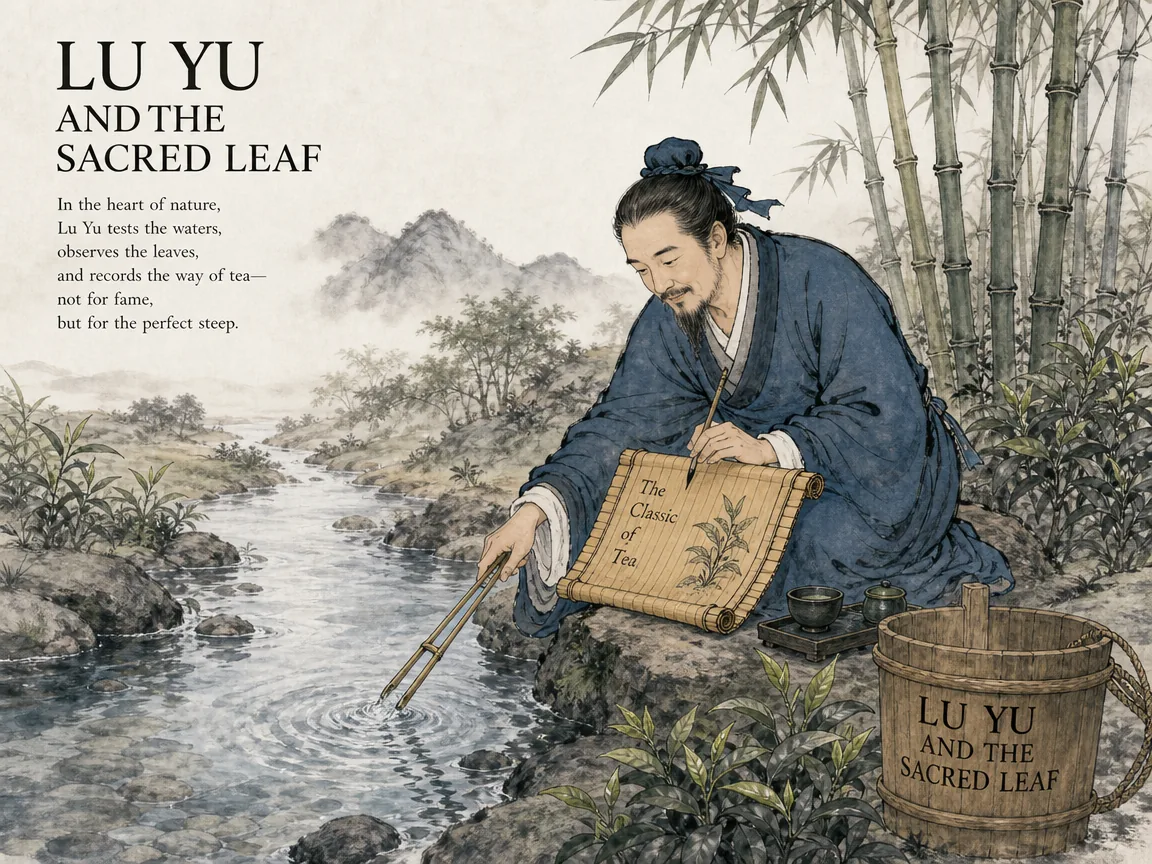
His attention to process reflects a broader philosophical synthesis. Lu Yu was influenced by both Chan Buddhist and Daoist thought, and the Classic of Tea carries traces of both traditions [1]. Making tea well, in his view, demands patience, discrimination, and presence. It asks the practitioner to slow down enough to notice what is actually happening—the sound of the water, the colour of the liquor, the warmth of the cup.
For modern readers, the takeaway is simple but not easy: making tea well is not a waste of time. It is a practice in paying attention.
Tea as a Mirror: What Your Tea Practice Reveals
There is a quiet difference between drinking tea and using tea. One is consumption; the other is engagement.
Modern life has turned many of us into caffeine consumers rather than tea practitioners. We drink quickly, often distracted, seeking energy more than ease. This is not a moral failing. It is simply the rhythm of a world that rewards speed. But the Chinese tea tradition offers a different possibility: that a cup of tea can be a moment of deliberate slowness, a brief return to oneself.
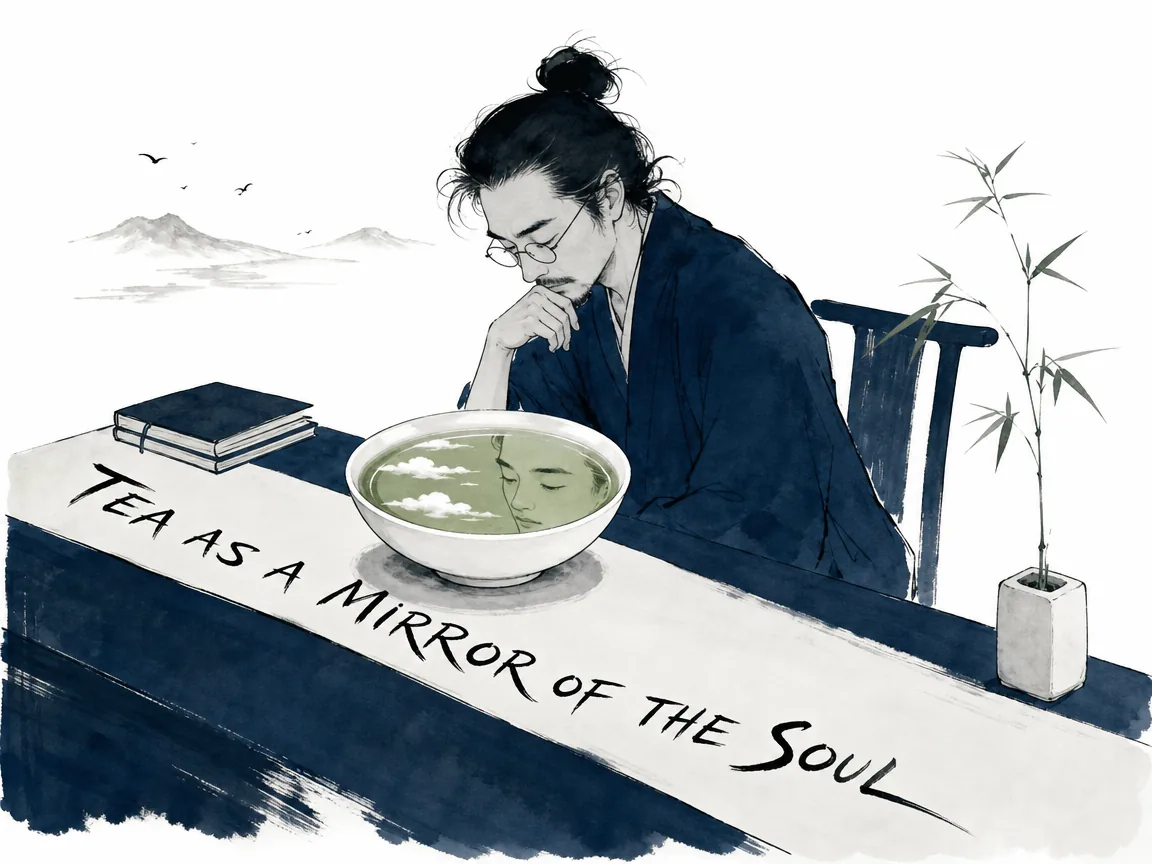
This does not require adopting a formal ceremony or buying special equipment. The invitation is far gentler than that. It asks only that you try, perhaps once a day, to make tea as an act of presence rather than reflex. Boil the water. Notice the steam. Watch the leaves unfurl. Feel the warmth of the cup in your hands. Drink without scrolling, without planning the next hour, without rushing to finish.
The traditional Chinese practice of tea is not about achieving a spiritual state. It is about noticing what is already available: the taste, the temperature, the pause. Even five minutes of this kind of attention can change the texture of a busy day.
The Leaf Keeps Growing
Returning to the opening image—a hurried morning drink consumed while looking at a screen—the contrast with the Chinese tea tradition is stark. But the contrast is not meant to shame. It is meant to invite.
Chinese tea culture has endured precisely because it has never been rigid. It adapted from eaten tea to boiled tea, from boiled tea to whisked tea, from whisked tea to the simple infusion we use today. Each transformation carried forward the same basic values: attention, simplicity, respect for the moment. The form changed; the spirit did not.
In an age of speed, the ancient practice of tea offers a quiet but powerful counter-rhythm. It asks us to slow down just enough to notice what we are doing, to treat a simple cup as worthy of care, and to find balance not by escaping the modern world but by meeting it with more presence than we usually allow ourselves.
A single leaf, steeped in hot water, can become something far greater than a beverage. It can become a reminder that living with purpose does not always require grand plans. Sometimes it requires only a cup, a pause, and the willingness to be fully present for a few quiet moments.
Practical Guidance for a Simpler Tea Practice
If you would like to bring something of this tradition into your own life, here are a few straightforward suggestions. They are invitations, not requirements.
- Choose one moment per day to make tea with full attention. It can be morning, afternoon, or evening—whatever fits your routine.
- Use whatever tools you have. A teapot, a cup, even a mug will work. The vessel matters less than the attitude.
- Notice three things: the sound of the water, the colour of the liquor, the temperature of the cup. This simple observation is enough to anchor you in the present.
- Do not rush to finish. Let the tea cool slightly before drinking. A slower pace is not laziness; it is a different relationship to time.
- Share occasionally. Offering a cup to someone else is one of the oldest and simplest Confucian gestures of care.
None of these steps require special knowledge, expensive equipment, or a commitment to any particular tradition. They are designed to be practical, flexible, and sustainable.
FAQ
What is the historical origin of tea drinking in China? According to the traditional account recorded in the Classic of Tea (Cha Jing, 《茶经》), tea drinking originated with the legendary figure Shennong and became known during the time of the Duke of Zhou [1]. This is a cultural origin story rather than a historically verified fact. Earlier textual evidence, including references found in the Han dynasty text Contract with a Servant (Tongyue, 《僮约》) by Wang Bao, suggests that tea was being prepared and consumed in regions such as Sichuan by the first century BCE [1].
How is Chinese tea different from Western tea culture? Chinese tea tradition places strong emphasis on the qualities of the leaf, the water, and the moment of preparation, often treating tea as a practice of attention rather than merely a caffeinated beverage. Western tea culture, particularly from the seventeenth century onward, developed its own distinctive customs such as adding milk and sugar, formal afternoon tea services, and a strong association with hospitality and social visiting. Both traditions are valid; they simply reflect different historical and cultural contexts.
What does “Chan and tea share one taste” (chan cha yi wei, 禅茶一味) mean? This phrase expresses the idea that the mindfulness cultivated in Chan Buddhist meditation and the attentiveness required in preparing and drinking tea share the same quality of presence. The concept is associated with the tradition of temple tea culture that grew alongside Chan Buddhism, particularly from the Tang dynasty onward [1]. While the exact phrase has complex origins and is sometimes linked to later cultural transmission between China and Japan, the underlying principle—that tea practice and meditation practice are not fundamentally separate—is a well-established idea in Chinese Buddhist thought.
Can I practice Chinese tea culture without following any religion? Absolutely. The Chinese tradition of tea has always been inclusive, drawing on Daoist, Confucian, and Buddhist influences while remaining accessible to people of all backgrounds. You do not need to adopt any religious belief to appreciate the philosophical insights, the historical depth, or the practical benefits of a mindful tea practice. Tea, in this tradition, is ultimately about paying attention—not about doctrine.
Sources & Further Reading
- “Chapter Six: Drinking” from the Classic of Tea (《茶经·六之饮》) — Primary source text containing Lu Yu's passage on the origins of tea and the “nine difficulties” of tea preparation.
- Treatise on Tea in the Daguan Era (Daguan Chalun, 《大观茶论》) — Wikisource — Emperor Huizong's treatise describing the Song whisked-tea method (dian cha, 点茶), including mixing the paste (tiao gao, 调膏), whisking (ji fu, 击拂), and foam clinging to the bowl (yao zhan, 咬盏).
- “Tea in the Ming Dynasty as Seen by Japanese Monk Sakugen Shūryō” (策彦周良が見た明代の茶事) | Science Portal China — Scholarly overview of Chinese tea history covering the transition from Tang cake tea to Ming loose-leaf infusion, including the Hongwu Emperor's 1391 edict abolishing tribute tea cakes.
Further Reading
- The Classic of Tea (Cha Jing, 《茶经》) by Lu Yu — foundational text on tea culture and philosophy.
- Treatise on Tea in the Daguan Era (Daguan Chalun, 《大观茶论》) by Emperor Huizong of Song — detailed treatise on Song dynasty whisked tea.
- Academic works on Chinese tea history, including studies on the Tang-Song-Ming transitions in tea preparation methods, reflecting the enduring wisdom of Chinese Tea Philosophy.
Examine this artistic principle further through the classical aesthetic philosophy of Why We Call Ancient Chinese Art “Ugly” — And What Aesthetic Humility Can Teach Us.
Deepen your understanding of these principles in our reflection on Why Chinese Aesthetics Chooses Stillness: How Daoist Simplicity Can Help Modern Readers Find Peace.






