
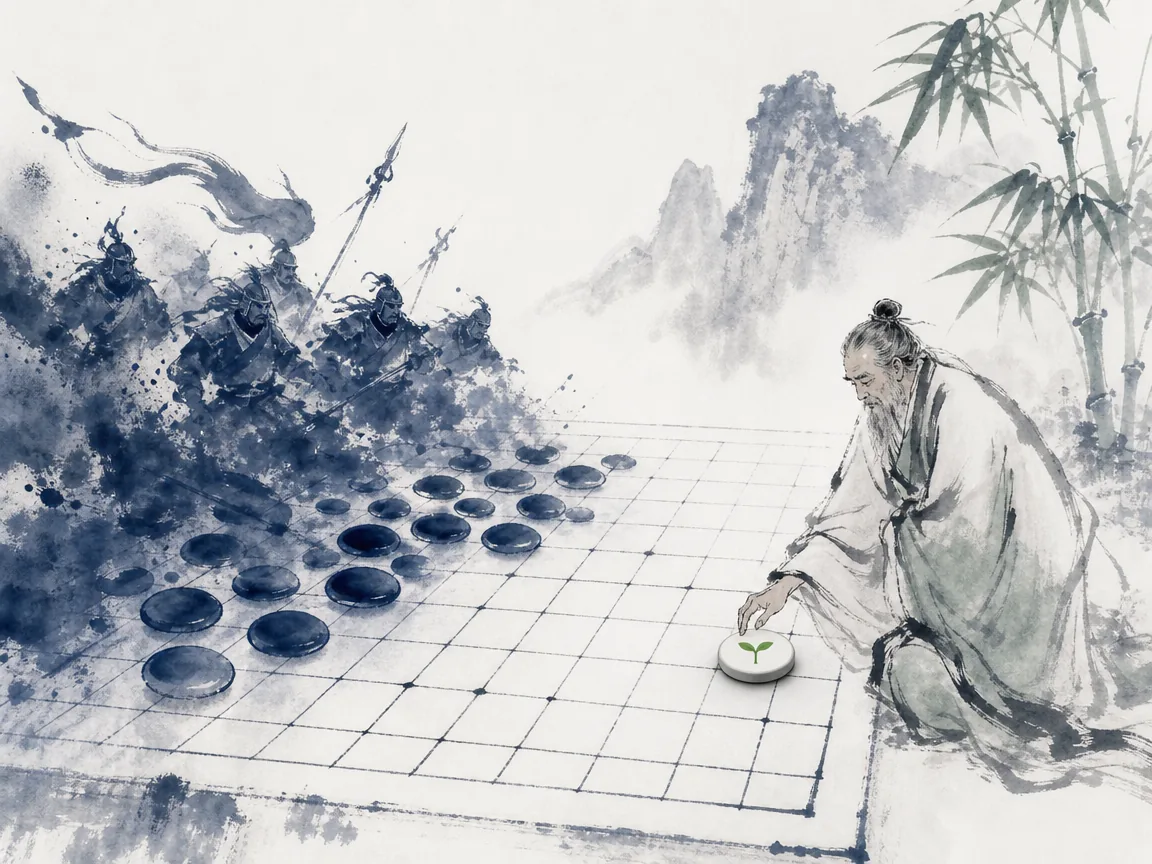
玄用章第六十九
Key Takeaway: "There is no greater misfortune than underestimating the enemy… When two opposing armies meet in battle, the one that feels sorrow wins." — Laozi, Daodejing Chapter 69
Strategists say: I dare not act as host, but prefer to play the guest; I dare not advance an inch, but prefer to retreat a foot. When two evenly matched armies meet, the side that enters battle with grief wins—a foundational perspective explored in Daodejing Chapter 69.
Daodejing Chapter 69: When Opposing Armies Clash, the Griever Triumphs
The wisdom of Chapter 69 addresses a fundamental human dynamic: how we navigate ambition, quietude, and the natural flow of existence. In the classical tradition, this passage serves as both a metaphysical mirror and a practical compass for daily living and leadership. Follow the sequential development of the text in Laozi’s next philosophical movement in Recognizing the Difficulty: My Words Are Easy to Grasp, Yet Few Understand.
By shifting our focus from outer coercion to internal stillness, we uncover a more resilient way of relating to ourselves and the world around us.
Complete Chapter Translation: Modern Western Reading
The strategists have the sayings: “When you doubt your ability to meet the enemy's attack, take the offensive yourself”' and “If you doubt your ability to advance an inch, then retreat a foot”. This latter is what we call to march without moving, To roll the sleeve, but present no bare arm, The hand that seems to hold, yet had no weapon in it, A host that can confront, yet presents no battle-front.
Now the greatest of all calamities is to attack and find no enemy. I can have no enemy only at the price of losing my treasure. Therefore when armies are raised and issues joined it is he who does not delight in war that wins.
道德经中文原文与对照
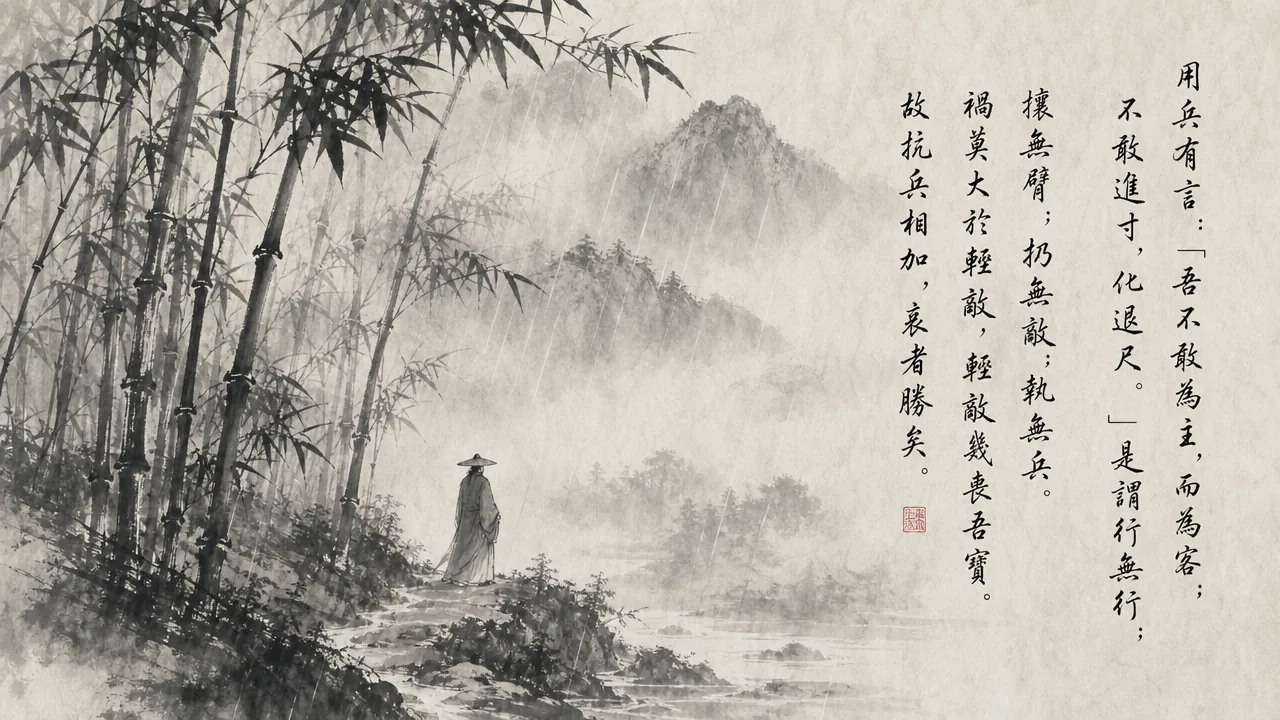
【原文】 用兵有言:「吾不敢爲主,而爲客;不敢進寸,化退尺。」是謂行無行;攘無臂;扔無敵;執無兵。禍莫大於輕敵,輕敵幾喪吾寶。故抗兵相加,哀者勝矣。
核心要义解析 (Philosophical Insights)
- 道义发微:本章通过“玄用章第六十九”阐发了《道德经》的核心精髓。从“有”与“无”、“动”与“静”的辩证转化中,提醒我们在日用常行中摒弃过度的功利执念,回归纯粹本真的生命状态。
- 现代启示:当外界喧嚣与评判标准不断施加压力时,保持内心的虚静与不争,反而是最强大的定力与智慧。
Discover the historical and philosophical roots in the classical foundation in Independent Simplicity: A Small Country with Few Inhabitants.
For a deeper comparative examination of these ideas, explore our related study on The Formation of Form: The Valley Spirit and the Primal Mother.






