
同異章第四十一
Key Takeaway: "When the highest type of person hears of the Tao, they diligently practice it… If it were not laughed at, it would not be the Tao." — Laozi, Daodejing Chapter 41
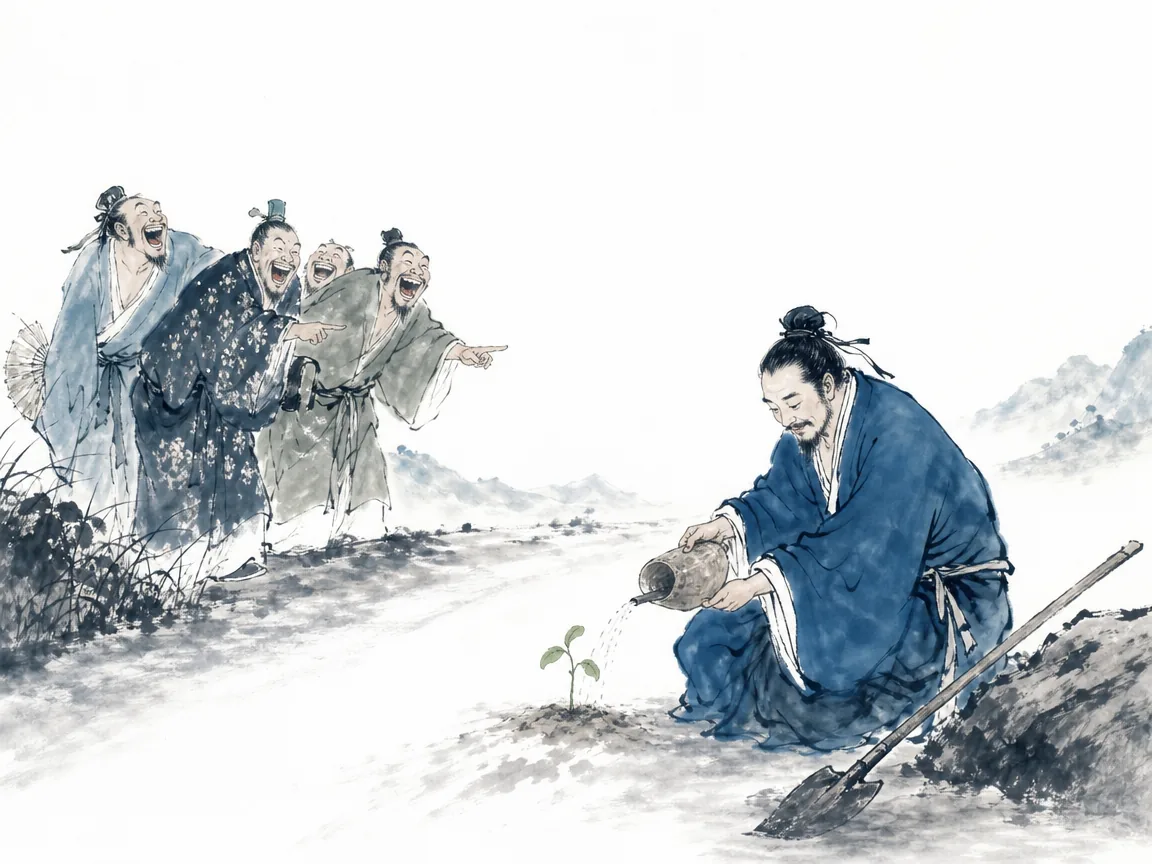
When the superior student hears of the Tao, they practice it diligently; when the mediocre student hears it, they waver; when the foolish student hears it, they laugh loudly. If not laughed at, it would not be the Tao—a foundational perspective explored in Daodejing Chapter 41 Translation.
Daodejing Chapter 41 Translation: Greatest Square Has No Corners; Great Music Sounds Like Faint Silence
The wisdom of Daodejing Chapter 41 Translation addresses a fundamental human dynamic: how we navigate ambition, quietude, and the natural flow of existence. In the classical tradition, this passage serves as both a metaphysical mirror and a practical compass for daily living and leadership. Explore how this principle translates into contemporary daily life in our guide to Why the Highest Things Look Opposite to Everything We Know.
By shifting our focus from outer coercion to internal stillness, we uncover a more resilient way of relating to ourselves and the world around us.
Complete Chapter Translation: Modern Western Reading
When the man of highest capacities hears Tao He does his best to put it into practice. When the man of middling capacity hears Tao He is in two minds about it.
When the man of low capacity hears Tao He laughs loudly at it. If he did not laugh, it would not be worth the name of Tao.
Therefore the proverb has it: “The way out into the light often looks dark, The way that goes ahead often looks as if it went back.” The way that is least hilly often looks as if it went up and down, The “power” that is really loftiest looks like an abyss, What is sheerest white looks blurred.
The “power” that is most sufficing looks inadequate, The “power” that stands firmest looks flimsy. What is in its natural, pure state looks faded; The largest square has no corners, The greatest vessel takes the longest to finish, Great music has the faintest notes, The Great From is without shape.
For Tao is hidden and nameless. Yet Tao alone supports all things and brings them to fulfillment.
道德经中文原文与对照
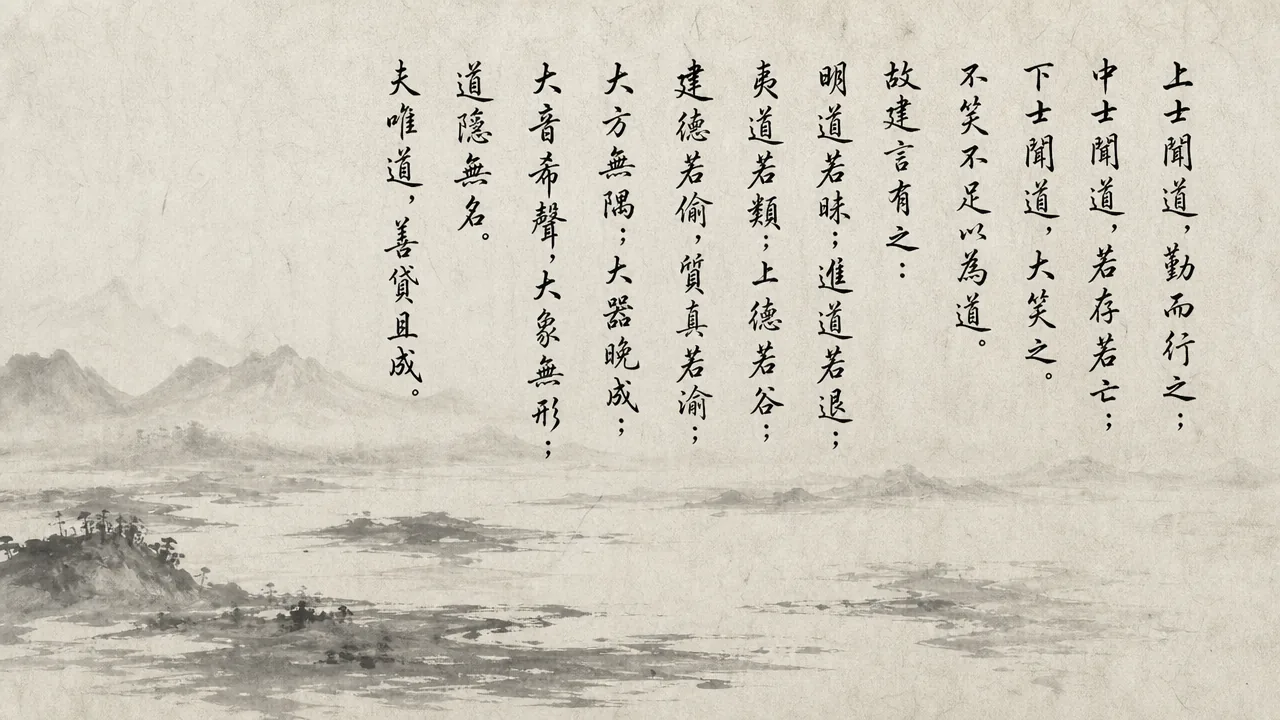
【原文】 上士聞道,勤而行之;中士聞道,若存若亡;下士聞道,大笑之。不笑不足以為道。故建言有之:明道若昧;進道若退;夷道若类;上德若谷;大白若辱;廣德若不足;建德若偷;質真若渝;大方無隅;大器晚成;大音希聲;大象無形;道隱無名。夫唯道,善貸且成。
核心要义解析 (Philosophical Insights)
- 道义发微:本章通过“同異章第四十一”阐发了《道德经》的核心精髓。从“有”与“无”、“动”与“静”的辩证转化中,提醒我们在日用常行中摒弃过度的功利执念,回归纯粹本真的生命状态。
- 现代启示:当外界喧嚣与评判标准不断施加压力时,保持内心的虚静与不争,反而是最强大的定力与智慧。
Follow the sequential development of the text in Laozi’s next philosophical movement in Cosmic Evolution: The Tao Gives Birth to One, Two, and Three.
For a deeper comparative examination of these ideas, explore our related study on Should We Question What a Society Preaches Most?.






