
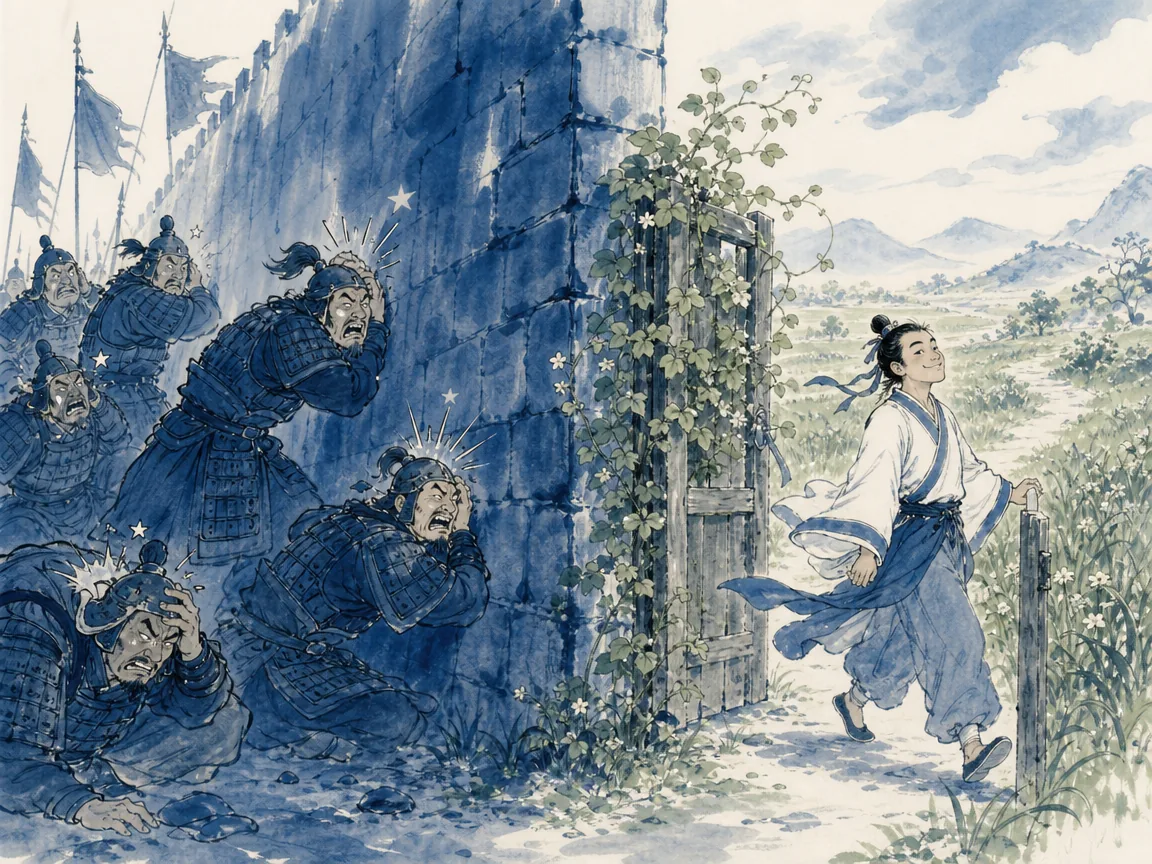
九變第八
Core Insight: "There are roads which must not be followed, armies which must be not attacked, towns which must be not besieged, positions which must not be contested, commands of the sovereign which must not be obeyed." — Sun Tzu, 九變第八
「途有所不由,軍有所不擊,城有所不攻,地有所不爭,君命有所不受。」
Dogmatic adherence to rules produces disaster. Real-world leadership demands contextual adaptation—knowing when not to advance, when to disobey political meddling, and guarding against the five psychological character flaws that bring ruin—a foundational perspective explored in Art of War Chapter 8. Discover how ancient strategy applies to modern competition in Why “Winning Every Battle” Can Lose the War.
Art of War Chapter 8: Overcoming Rigid Dogma and Character Pitfalls
Art of War Chapter 8 (九變第八) emphasizes tactical adaptability over mechanical formula. The mature commander evaluates terrain and political commands with realistic detachment, remaining vigilant against the five fatal personal extremes: recklessness, cowardice, quick temper, delicate honor, and over-solicitude for troops.
Complete Chapter Translation: Modern Western Reading
Sun Tzŭ said: In war, the general receives his commands from the sovereign, collects his army and concentrates his forces.
When in difficult country, do not encamp. In country where high roads intersect, join hands with your allies. Do not linger in dangerously isolated positions. In hemmed-in situations, you must resort to stratagem. In a desperate position, you must fight. There are roads which must not be followed, armies which must be not attacked, towns which must not be besieged, positions which must not be contested, commands of the sovereign which must not be obeyed.
The general who thoroughly understands the advantages that accompany variation of tactics knows how to handle his troops. The general who does not understand these, may be well acquainted with the configuration of the country, yet he will not be able to turn his knowledge to practical account. So, the student of war who is unversed in the art of war of varying his plans, even though he be acquainted with the Five Advantages, will fail to make the best use of his men.
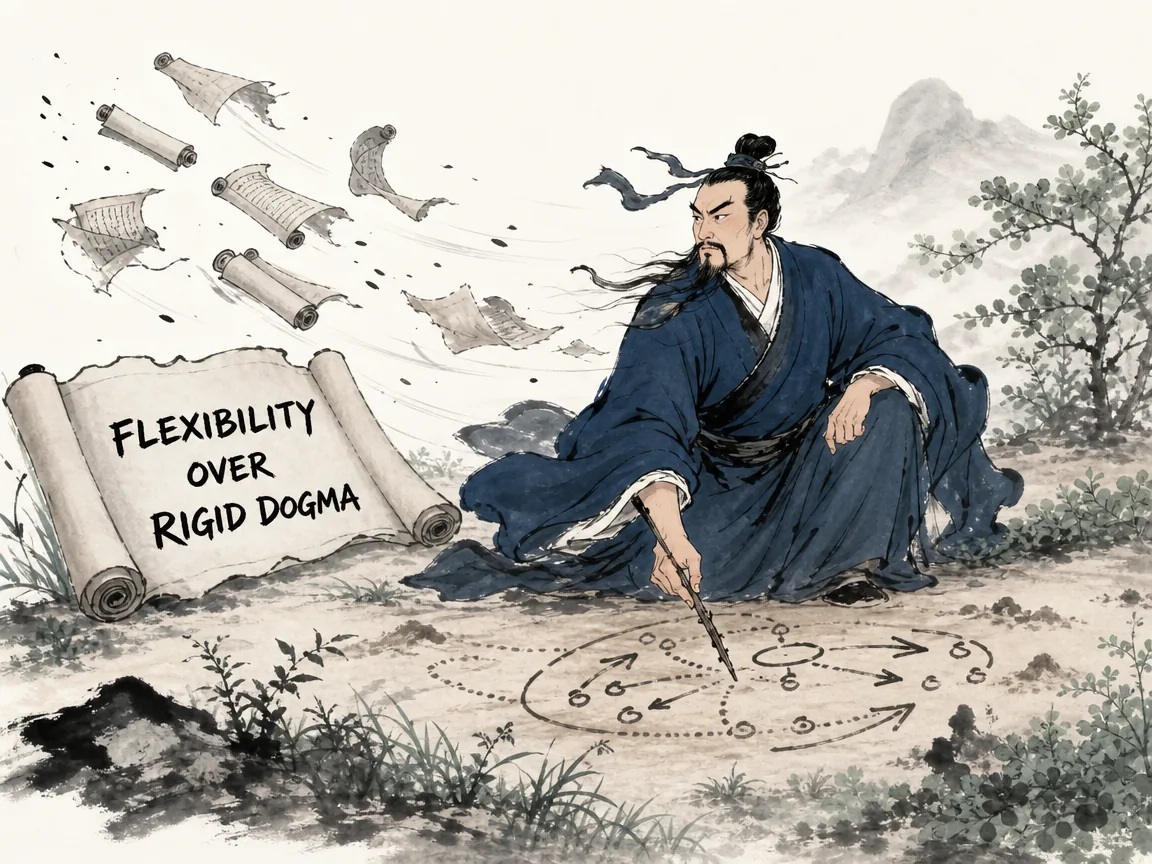
Hence in the wise leader’s plans, considerations of advantage and of disadvantage will be blended together. If our expectation of advantage be tempered in this way, we may succeed in accomplishing the essential part of our schemes. If, on the other hand, in the midst of difficulties we are always ready to seize an advantage, we may extricate ourselves from misfortune.
Reduce the hostile chiefs by inflicting damage on them; and make trouble for them, and keep them constantly engaged; hold out specious allurements, and make them rush to any given point. The art of war teaches us to rely not on the likelihood of the enemy’s not coming, but on our own readiness to receive him; not on the chance of his not attacking, but rather on the fact that we have made our position unassailable.
There are five dangerous faults which may affect a general: (1) Recklessness, which leads to destruction; (2) cowardice, which leads to capture; (3) a hasty temper, which can be provoked by insults; (4) a delicacy of honour which is sensitive to shame; This need not be taken to mean that a sense of honour is really a defect in a general. What Sun Tzŭ condemns is rather an exaggerated sensitiveness to slanderous reports, the thin-skinned man who is stung by opprobrium, however undeserved. Mei Yao-ch’en truly observes, though somewhat paradoxically: "The seeker after glory should be careless of public opinion." (5) over-solicitude for his men, which exposes him to worry and trouble.
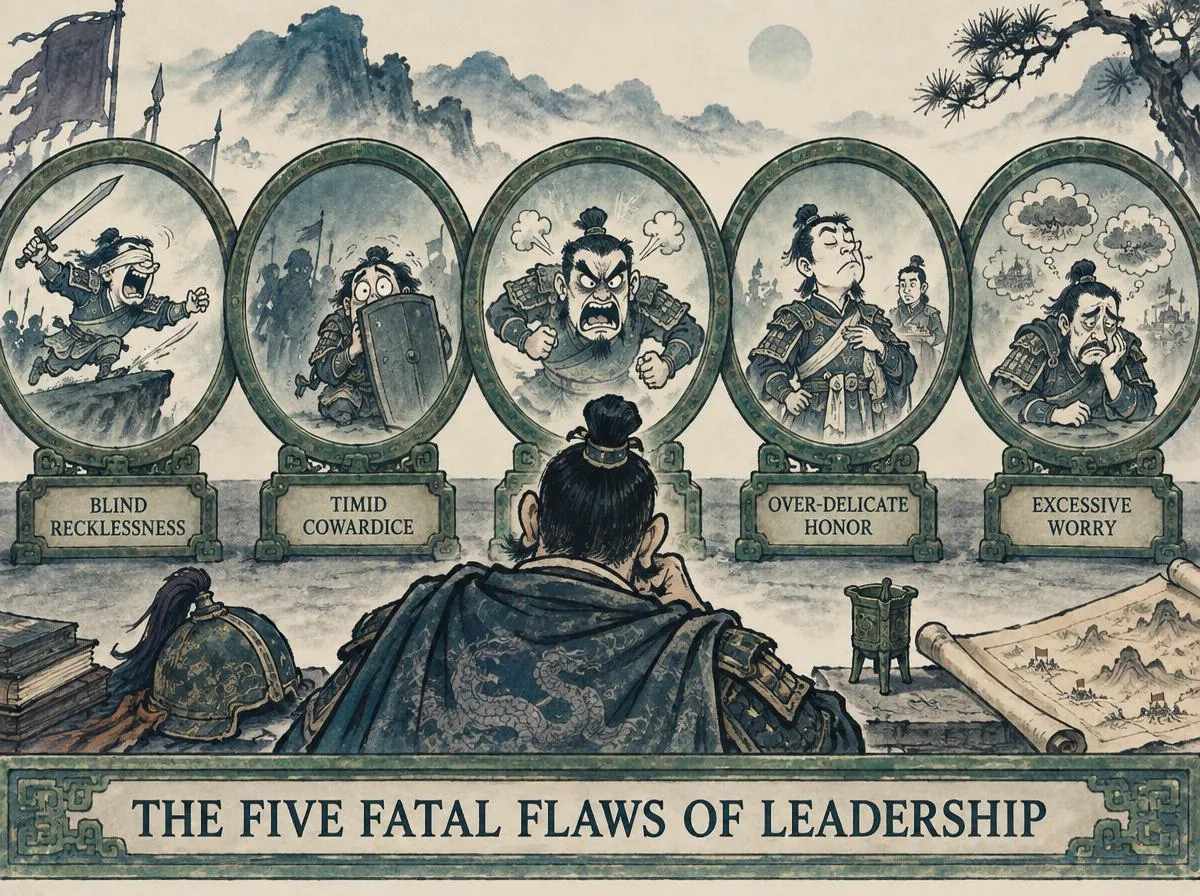
These are the five besetting sins of a general, ruinous to the conduct of war. When an army is overthrown and its leader slain, the cause will surely be found among these five dangerous faults. Let them be a subject of meditation. "Marshal Turenne," p. 50.
孙子兵法中文原文与对照
【文言原文】
孫子曰:凡用兵之法,將受命於君,合軍聚眾。圮地無舍,衢地合交,絕地無留,圍地則謀,死地則戰。途有所不由,軍有所不擊,城有所不攻,地有所不爭,君命有所不受。故將通於九變之利者,知用兵矣;將不通於九變之利,雖知地形,不能得地之利矣;治兵不知九變之術,雖知地利,不能得人之用矣。
是故智者之慮,必雜於利害,雜於利而務可信也,雜於害而患可解也。是故屈諸侯者以害,役諸侯者以業,趨諸侯者以利。
故用兵之法,無恃其不來,恃吾有以待之;無恃其不攻,恃吾有所不可攻也。
故將有五危︰必死,可殺也﹔必生,可虜也﹔忿速,可侮也﹔廉潔,可辱也﹔愛民,可煩也。凡此五者,將之過也,用兵之災也。覆軍殺將,必以五危,不可不察也。
Follow the progression of the military treatise in the next tactical doctrine in The Army on the March: Reading Terrain, Observing Signs, and Psychological Leadership.
For a deeper comparative examination of these ideas, explore our related study on The Nine Situations: Psychological Pressure, Ground Psychology, and the Shuai-Jan Serpent.







[…] Western strategic thought arrived at a parallel conclusion through a different path. Carl von Clausewitz developed the concept of center of gravity (German: Schwerpunkt). In On War, he describes it as "a centre of power and movement, on which everything depends" . Strategy must identify the enemy's center of gravity and concentrate force against it. For the original military treatise and commentary, read the complete strategic translation and classical commentary of Variation of Tactics: Contextual Flexibility and the Five Fatal Flaws of Leadership. […]