
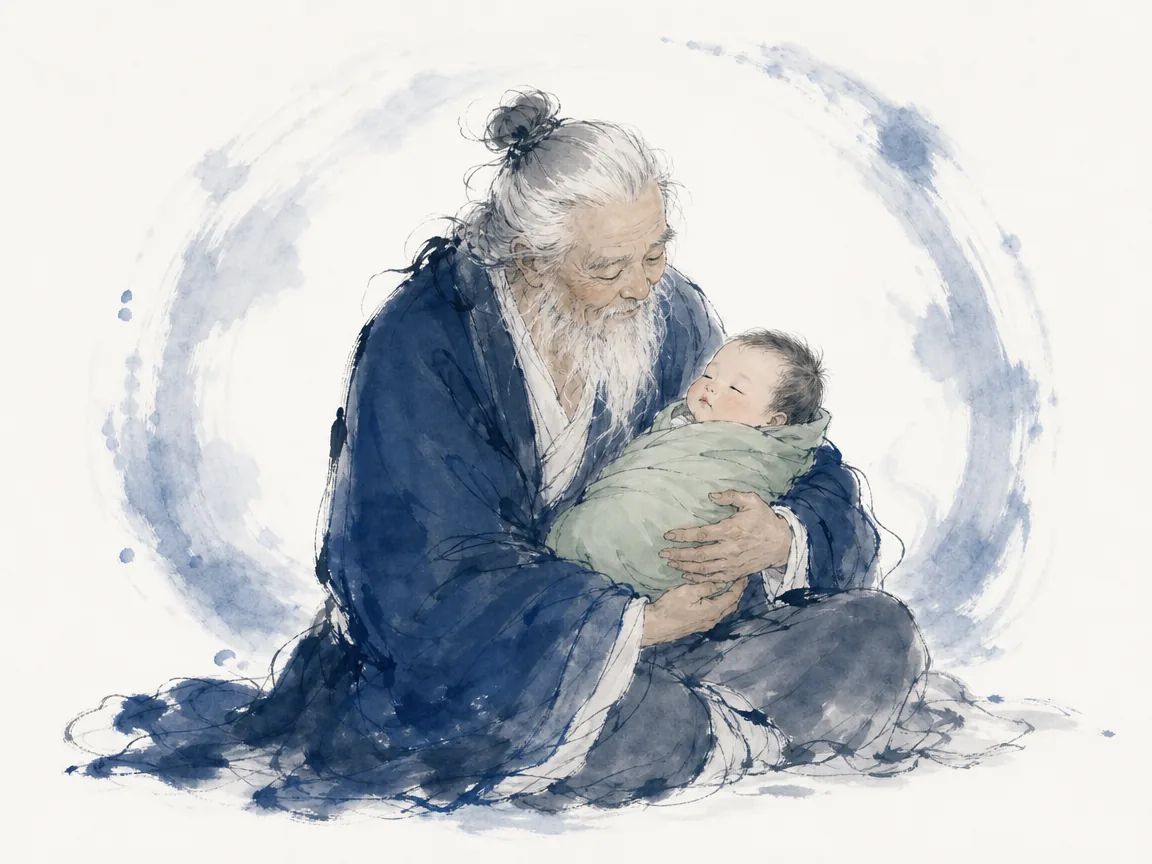
能爲章第十
Key Takeaway: "To rear them, but not in order to lean upon them; to lead them, but not to rule them—this is called the Mysterious Power." — Laozi, Daodejing Chapter 10
Can you harmonize body and soul into an undivided oneness? Can you soften your vital breath until you are as receptive as a newborn infant? True virtue rears life without claiming ownership—a foundational perspective explored in Daodejing Chapter 10.
Daodejing Chapter 10: Nurturing Life Without Possessive Attachment
The wisdom of Chapter 10 addresses a fundamental human dynamic: how we navigate ambition, quietude, and the natural flow of existence. In the classical tradition, this passage serves as both a metaphysical mirror and a practical compass for daily living and leadership.
By shifting our focus from outer coercion to internal stillness, we uncover a more resilient way of relating to ourselves and the world around us. To see how these classical paradoxes speak to modern workplace burnout and the urge to micromanage, explore our practical guide on From Control to Profound Virtue: Laozi’s Chapter 10 for Modern Life.
Complete Chapter Translation: Modern Western Reading
Can you keep the unquiet physical-soul from straying, hold fast to the Unity, and never quit it? Can you, when concentrating your breath, make it soft like that of a little child? Can you wipe and cleanse your vision of the Mystery till all is without blur? Can you love the people and rule the land, yet remain unknown?
Can you in opening and shutting the heavenly gates play always the female part? Can your mind penetrate every corner of the land but you yourself never interfere? Rear them, then, feed them, Rear them, but do not lay claim to them.
Control them, but never lean upon them; Be chief among them, but do not manage them. This is called the Mysterious Power.
道德经中文原文与对照
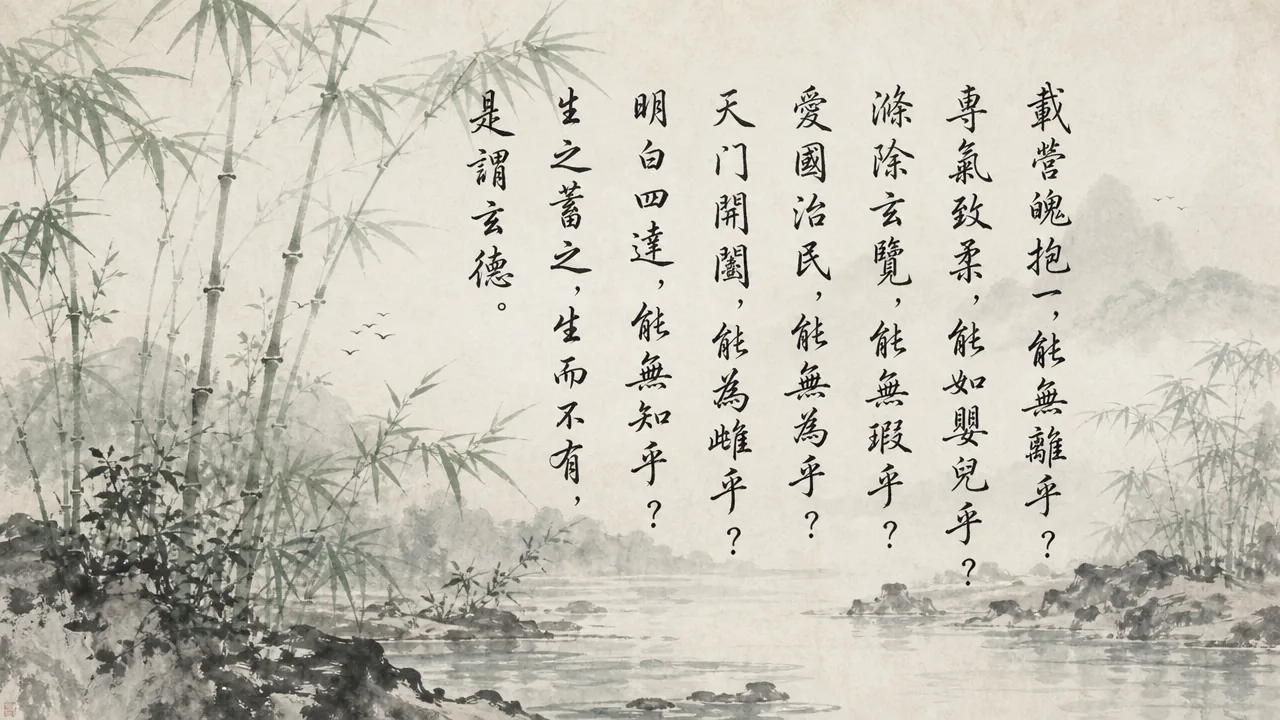
【原文】 載營魄抱一,能無離乎?專氣致柔,能如嬰兒乎?滌除玄覽,能無瑕乎?愛國治民,能無爲乎?天門開闔,能爲雌乎?明白四達,能無知乎?生之蓄之,生而不有,爲而不恃,長而不宰,是謂玄德。
核心要义解析 (Philosophical Insights)
- 道义发微:本章通过“能爲章第十”阐发了《道德经》的核心精髓。从“有”与“无”、“动”与“静”的辩证转化中,提醒我们在日用常行中摒弃过度的功利执念,回归纯粹本真的生命状态。
- 现代启示:当外界喧嚣与评判标准不断施加压力时,保持内心的虚静与不争,反而是最强大的定力与智慧。
The philosophical climax of Chapter 10 — rearing without possessing, acting without presumption, and leading without controlling — defines the supreme ideal of Xuande (玄德). For an in-depth meditation on how this virtue deepens across the canon, read our reflection on Why True Nurturing Never Claims Ownership.
To follow Laozi’s continuing sequence of teachings on form and emptiness, proceed to the next chapter in our translation series: The Utility of Nothingness: The Essential Value of Empty Space.






