
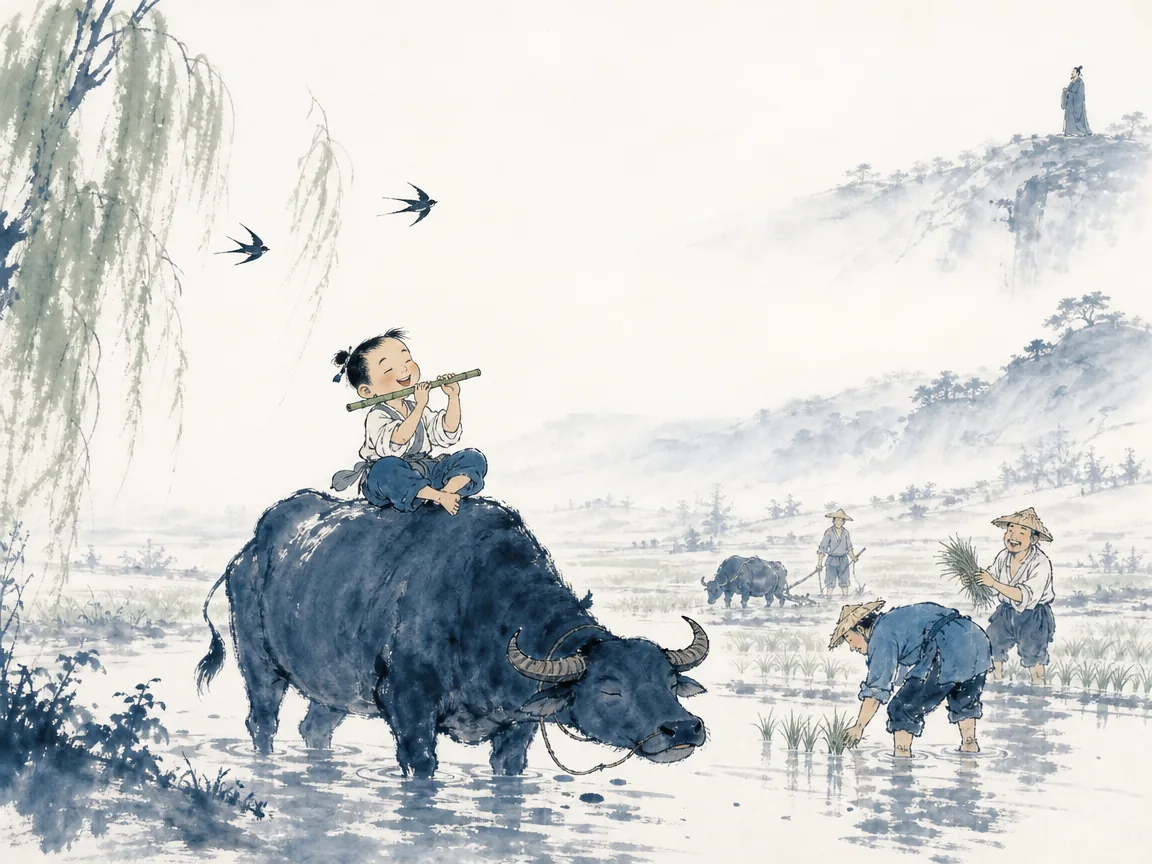
淳風章第十七
Key Takeaway: "Of the highest the people merely know that such a one exists… The work is done, the aim fulfilled; and they say, 'We did it ourselves!'" — Laozi, Daodejing Chapter 17
Under the greatest rulers, the people merely know that someone exists above them. When the work is accomplished and tasks fulfilled, the people cheerfully say: 'It happened to us naturally!' This principle is central to Daodejing Chapter 17 Translation.
Daodejing Chapter 17 Translation: Effortless Influence and Trust
The wisdom of Daodejing Chapter 17 Translation addresses a fundamental human dynamic: how we navigate ambition, quietude, and the natural flow of existence. In the classical tradition, this passage serves as both a metaphysical mirror and a practical compass for daily living and leadership. Explore how this principle translates into contemporary daily life in our guide to Highest-Level Leadership Leaves No Trace: What the Daodejing Knew About Power and Self-Sufficiency.
By shifting our focus from outer coercion to internal stillness, we uncover a more resilient way of relating to ourselves and the world around us.
Complete Chapter Translation: Modern Western Reading
Of the highest the people merely know that such a one exists; The next they draw near to and praise. The next they shrink from, intimidated; but revile.
Truly, “It is by not believing people that you turn them into liars”. But from the Sage it is so hard at any price to get a single word That when his task is accomplished, his work done, Throughout the country every one says: “It happened of its own accord”.
道德经中文原文与对照
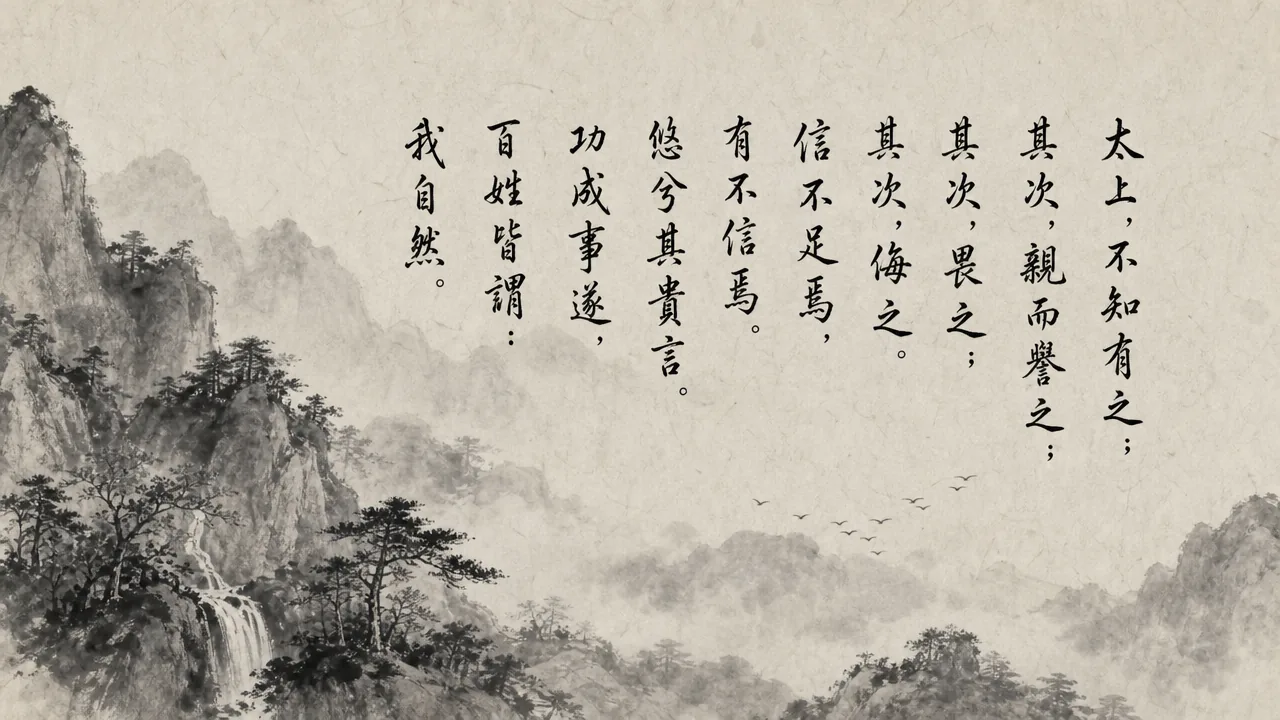
【原文】 太上,不知有之;其次,親而譽之;其次,畏之;其次,侮之。信不足焉,有不信焉。悠兮其貴言。功成事遂,百姓皆謂:我自然。
核心要义解析 (Philosophical Insights)
- 道义发微:本章通过“淳風章第十七”阐发了《道德经》的核心精髓。从“有”与“无”、“动”与“静”的辩证转化中,提醒我们在日用常行中摒弃过度的功利执念,回归纯粹本真的生命状态。
- 现代启示:当外界喧嚣与评判标准不断施加压力时,保持内心的虚静与不争,反而是最强大的定力与智慧。
Follow the sequential development of the text in Laozi’s next philosophical movement in The Decline into Artificial Morality: When Spontaneous Goodness Is Lost.
Deepen your understanding of these principles in our reflection on Why Strength Turns to Fragility: Laozi’s Chapter 42 and the Cost of Unchecked Power.






